
Why Pet-Friendly Resorts Differ from Standard Hotels
Disclosure: This post may contain affiliate links. We may earn a commission for purchases made through links in this post, at no cost to you.
A pet-friendly resort is defined as a property that actively designs its facilities, policies, and services around the comfort and safety of pets, not just one that tolerates their presence. That distinction is the entire ballgame. Most travelers searching for why pet-friendly resorts differ from standard accommodations are surprised to discover how wide that gap actually is. The difference goes far beyond a “pets allowed” sign on the door. It touches pricing structures, staff training, physical design, and the moment-to-moment experience your dog or cat has from check-in to checkout. Understanding these differences before you book can save you from a stressful trip and a very unhappy animal.
Why pet-friendly resorts differ from standard accommodations
The resort compatibility checklist published in 2026 makes one thing crystal clear: “pet-friendly” is often a marketing label, not an operational commitment. A standard hotel that permits pets may allow your dog in the room but offer no grass access, no designated relief area, and no pet-safe walking routes. That environment forces your pet out of its natural routine, which creates stress for the animal and frustration for you. True pet-friendly resorts are built around the idea that a pet’s daily needs, movement, and comfort are non-negotiable parts of the guest experience.
The operational gap between these two categories is significant. Standard accommodations treat pets as an add-on, handled with a waiver and a fee. Pet-friendly resorts treat pets as guests with their own requirements. That shift in philosophy changes everything from room layout to staff responsibilities to the physical grounds of the property. When you understand this distinction, you stop searching for hotels that “allow” pets and start searching for resorts that genuinely welcome them.
How do pet-friendly resorts support your pet’s natural routine?
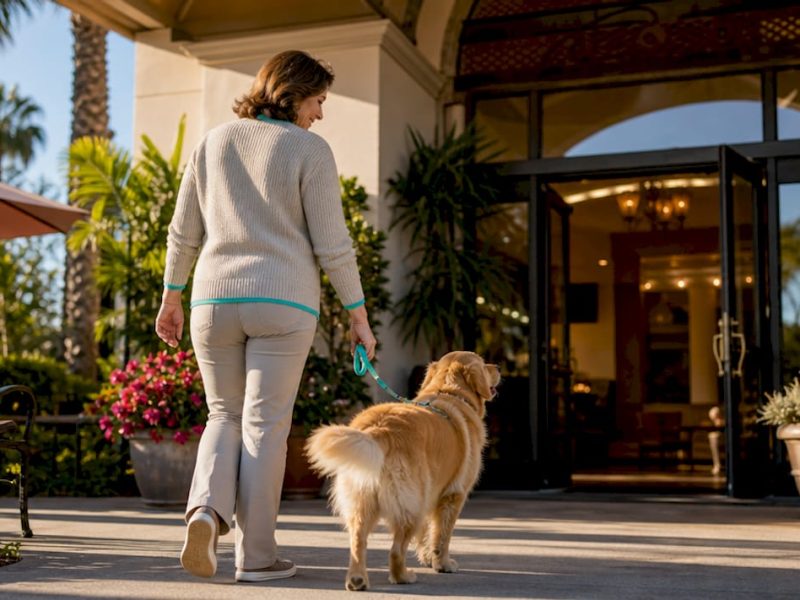
Pets thrive on routine. A dog that walks the same path at the same time each day is a calm dog. Drop that same dog into a concrete-heavy hotel environment with no green space, no familiar smells, and no clear relief area, and you have a stressed, disruptive animal. Proper grass access and pet-friendly walk routes are not luxury extras. They are the baseline requirement for a comfortable pet travel experience.
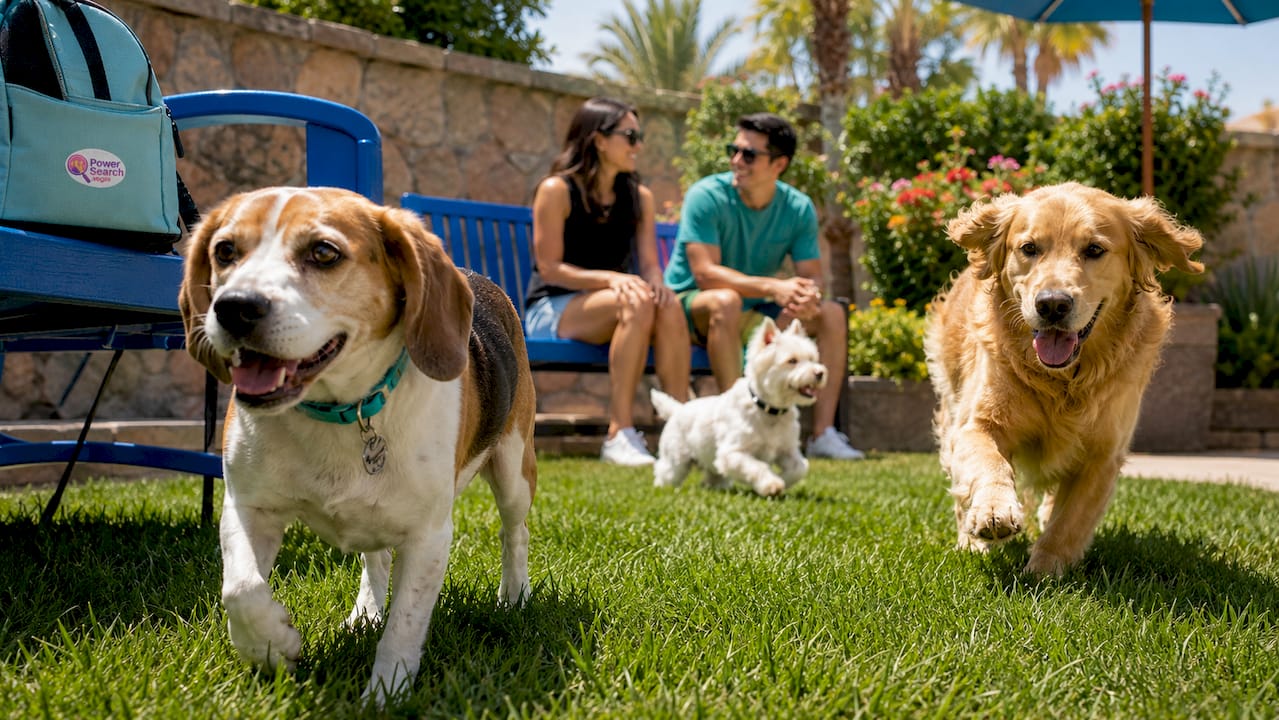
Pet-friendly resorts address this by designing their physical environment with animals in mind. You can expect designated pet relief stations with waste bags and disposal units, mapped walking routes that avoid high-traffic guest areas, and outdoor spaces where dogs can move freely without anxiety. Some properties go further with welcome packages that include water bowls, pet beds, and treats waiting in the room on arrival. A pet concierge service, offered at select resort properties, can arrange dog walking, feeding schedules, and even playdates with other guest animals.
Pro Tip: Before booking any resort, ask specifically whether the pet relief area is grass or gravel. Gravel surfaces cause paw discomfort for many dogs and signal that the property designed the space for human convenience, not pet comfort.
The contrast with a standard hotel is stark. Most standard properties designate a small concrete strip near a parking lot as the “pet area.” There is no walking route, no environmental enrichment, and no staff trained to handle animal behavior. For a short overnight stay, that might be manageable. For a multi-day Las Vegas vacation, it becomes a real problem for both you and your pet.
What operational and policy differences set pet-friendly resorts apart?
Fee structures at pet-friendly resorts are more complex than those at standard hotels, and understanding them before you arrive protects your budget. AARP travel research from 2026 identifies several distinct fee models in the market: per-stay flat fees, per-night charges, refundable deposits, and nonrefundable cleaning fees. Hilton, for example, charges a per-stay fee with a capped maximum, which differs significantly from properties that charge per night and let costs compound across a week-long stay. Knowing which model applies to your booking changes your total cost calculation dramatically.
Here is how the main policy differences stack up between pet-friendly resorts and standard accommodations:
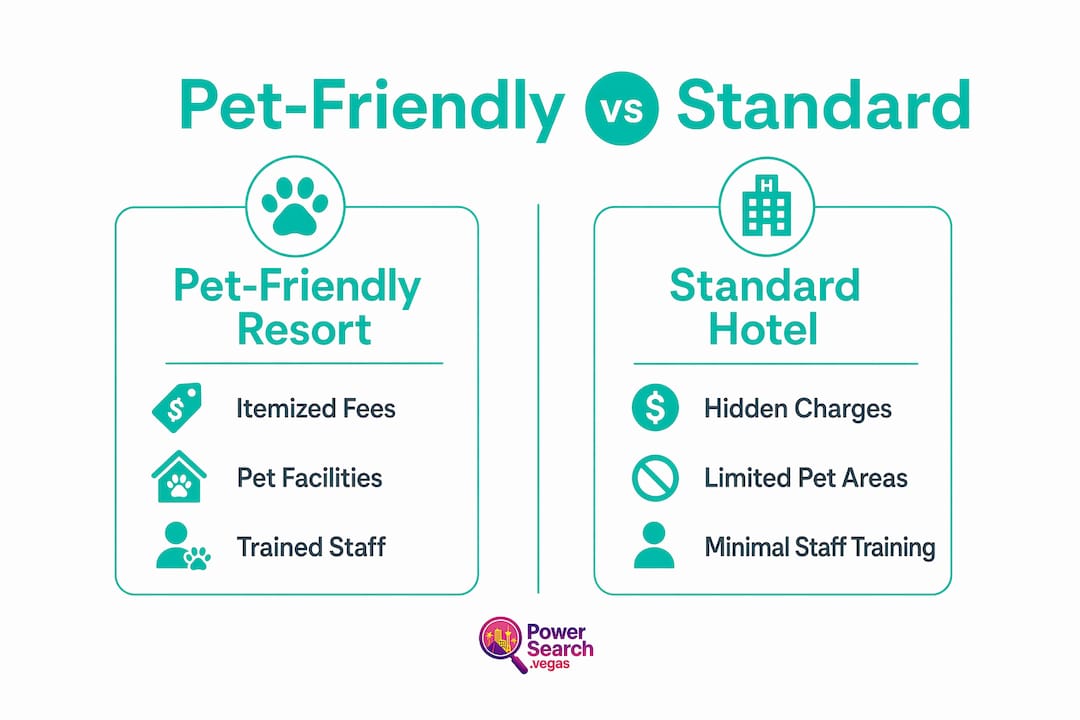
- Fee transparency. Pet-friendly resorts publish detailed fee schedules. Standard hotels often bury pet charges in fine print or disclose them only at check-in.
- Cleaning protocols. Pet-friendly properties use specialized cleaning products and extended turnover times. Pet-related cleaning costs add roughly $6 to $25 per room in direct labor, but the fees charged often reflect the full operational complexity, not just the cleaning time.
- Weight and breed restrictions. Standard hotels that permit pets frequently impose weight caps of 25 to 50 pounds. Dedicated pet-friendly resorts are more likely to accommodate larger breeds, as explored in depth for Vegas large dog options.
- Policy enforcement. Vague rules and inconsistent staff discretion are the top failure points in pet hospitality. Pet-friendly resorts invest in clear, written policies and staff training to apply them consistently.
| Feature | Pet-friendly resort | Standard hotel |
|---|---|---|
| Fee structure | Published, itemized, predictable | Often disclosed at check-in |
| Pet relief areas | Designated, maintained, mapped | Minimal or improvised |
| Staff training | Animal behavior awareness | General hospitality only |
| Cleaning protocol | Specialized, extended turnover | Standard room cleaning |
| Breed and size policy | Broader acceptance | Frequent restrictions |
Pro Tip: Always call the hotel directly before booking to confirm current pet fee policies. Online listings are frequently outdated, and Vegas room rate structures can shift seasonally, taking pet fee structures with them.
How do amenities and services enhance the pet travel experience?
The amenities gap between a true pet-friendly resort and a standard hotel is where the experience difference becomes most visible. A 2026 Springer Nature study on dog-friendly hotel service dimensions identifies six attributes that define the dog-friendly hotel experience and directly influence customer satisfaction. Support for animal-related activities and safety protocols rank as the most critical factors, yet they are also the most underperforming areas across the industry. That gap represents exactly where standard hotels fall short and where genuine pet-friendly resorts earn their reputation.
Dedicated pet amenities at top-tier properties include:
- On-site dog parks with secure fencing and separate areas for large and small breeds
- Grooming services and pet daycare for owners who want to explore the city without their animal
- In-room welcome kits with a pet bed, food and water bowls, treats, and waste bags
- Pet-sitting and dog-walking services coordinated through the front desk or a dedicated pet concierge
- Veterinary referral lists and 24-hour emergency contact information for local animal clinics
Staff expertise matters as much as physical amenities. At a genuine pet-friendly resort, front desk staff know which areas of the property are pet-accessible, housekeeping teams are trained to handle rooms with animals present, and management has clear protocols for noise complaints or behavioral incidents. That level of preparation simply does not exist at a standard hotel that added a pet policy as an afterthought.
| Amenity | Pet-friendly resort | Standard hotel |
|---|---|---|
| Dog park or play area | Common | Rare |
| In-room pet kit | Standard at many properties | Uncommon |
| Grooming or daycare | Available on-site or nearby | Not offered |
| Staff animal training | Formal protocols | None |
| Emergency vet referral | Provided at check-in | Not provided |
Why do pet-friendly resorts change how pet owners travel?
Pet owners face a specific set of travel constraints that non-pet owners never encounter. A 2026 MDPI study on pet owner tourism constraints demonstrates that these constraints directly shape behavioral intentions to travel. When accommodations cannot support a pet’s basic needs, owners either leave their pet behind or skip the trip entirely. Pet-friendly resorts reduce that friction by removing the most common barriers.
The practical impact on travel decisions is significant. Pet owners who find a resort that genuinely accommodates their animal are more likely to book longer stays, return for future trips, and recommend the property to other pet-owning travelers. That loyalty loop is why the best pet-friendly properties invest so heavily in their animal infrastructure. It is not charity. It is a sound business model built on a growing traveler segment.
Choosing the right resort requires matching the property’s specific features to your pet’s personality and physical needs. A high-energy dog needs outdoor space and walking routes. An anxious cat needs a quiet room away from elevator banks and event spaces. A senior pet with mobility issues needs ground-floor access and soft bedding. The resort compatibility checklist approach frames this as a system evaluation, not a label check. You are not asking “does this hotel allow pets?” You are asking “does this hotel work for my specific pet?”
How do pet-friendly resorts balance the needs of all guests?
Running a pet-friendly resort is operationally more demanding than running a standard property. A 2026 ScienceDirect policy capacity framework for balanced pet-friendly management identifies four dimensions that resorts must manage simultaneously: information, operations, servicescape, and service delivery. Failing in any one dimension creates problems for both pet-owning guests and those traveling without animals.
Here is how well-run pet-friendly resorts handle that balance:
- Information capacity. Clear signage, published policies, and staff communication prevent misunderstandings about where pets are and are not permitted.
- Operational capacity. Additional housekeeping staff, specialized cleaning supplies, and extended room turnover times are built into the property’s daily schedule.
- Servicescape capacity. Physical design separates pet-accessible zones from quiet areas, protecting non-pet guests from noise and allergen exposure.
- Service capacity. Trained staff resolve behavioral incidents quickly and fairly, applying rules consistently rather than leaving enforcement to individual discretion.
The resorts that get this right create an environment where pet owners feel genuinely welcome and non-pet guests feel genuinely respected. That balance requires investment, planning, and a management culture that takes both groups seriously. Standard hotels that add a pet policy without addressing these four dimensions consistently fail on at least two of them, which is why the experience so often disappoints.
Key takeaways
Pet-friendly resorts differ from standard accommodations because they build their entire operational model around supporting pets as guests, not tolerating them as exceptions.
| Point | Details |
|---|---|
| Design vs. permission | Pet-friendly resorts design facilities for pets; standard hotels merely permit them under restrictions. |
| Fee transparency matters | Always confirm pet fee structures directly with the property, as models vary widely from per-stay to per-night charges. |
| Amenities drive satisfaction | Dog parks, in-room kits, grooming, and staff training are the markers of a genuinely pet-friendly property. |
| Routine is everything | Grass access, mapped walk routes, and pet relief stations protect your pet’s routine and reduce travel stress. |
| Policy balance is an art | The best resorts manage information, operations, design, and service to satisfy both pet owners and non-pet guests. |
What I’ve learned from watching pet owners book the wrong resort
I have watched too many pet owners book a property based on a “pet-friendly” filter and arrive to find a concrete strip next to a loading dock as the designated dog area. The label is nearly meaningless without context. What you actually need to evaluate is whether the resort’s physical layout, staff training, and written policies align with your specific pet’s needs. That requires a phone call, not just a filter.
The properties that genuinely deliver on the pet-friendly promise share one trait: they treat the pet policy as a core product feature, not an accommodation. You can hear it in how the front desk staff answer questions about pet areas. You can see it in whether the property publishes a clear, itemized fee schedule before you book. Vague answers and surprise fees at check-in are the two clearest signals that a property added a pet policy to capture bookings without building the infrastructure to back it up.
My honest advice: match the resort to your pet’s personality before you match it to your own preferences. A high-energy retriever needs outdoor space more than a rooftop pool view. An anxious rescue needs a quiet wing more than a central location. Once you get that match right, the rest of the trip tends to fall into place beautifully.
— Mark
Find your perfect pet-friendly Las Vegas stay with Powersearch
Planning a Las Vegas vacation with your pet does not have to feel like a puzzle. Powersearch makes it genuinely exciting, with detailed hotel listings that include up-to-date pet policies, fee structures, and amenity breakdowns so you can compare properties side by side before you commit.

Whether you are traveling with a large dog or a small cat, Powersearch’s filters surface the properties that actually work for your animal, not just the ones that technically permit them. Check the 2026 booking timing guide to lock in the best rates on pet-friendly rooms before peak season fills them up. Vegas is waiting, and this time, your whole crew gets to come along.
FAQ
What makes a resort truly pet-friendly vs. just pet-permitting?
A truly pet-friendly resort designs its facilities, policies, and staff training around pets’ comfort and safety. A pet-permitting property simply allows animals without providing dedicated amenities, walk routes, or trained support.
How much do pet fees typically cost at pet-friendly resorts?
Fee models vary widely. Some properties charge a flat per-stay fee, others charge per night, and some require a refundable deposit. Hilton, for example, uses a capped per-stay model, while other brands charge nightly rates that compound over longer stays.
What amenities should I expect at a pet-friendly resort?
Expect designated pet relief areas, in-room welcome kits with bowls and bedding, mapped walking routes, and staff trained in animal behavior. Top-tier properties also offer grooming, daycare, and veterinary referral lists.
Why do pet cleaning fees seem higher than the actual cleaning cost?
Pet-related cleaning labor adds roughly $6 to $25 per room in direct costs, but the fee covers the full operational complexity including extended turnover time, specialized products, and additional inspection steps.
How do I choose a pet-friendly resort that actually works for my pet?
Evaluate the property as a compatibility system, not a label. Check for grass access, quiet room locations, breed and size policies, and ask staff directly about walking routes and relief areas before you book.
No Comments