

How Pet-Friendly Hotel Policies Work: 2026 Guide
Disclosure: This post may contain affiliate links. We may earn a commission for purchases made through links in this post, at no cost to you.
Pet-friendly hotel policies are formal agreements that define the rules, fees, and accommodations hotels require when guests bring animals on property. Understanding how pet-friendly hotel policies work before you book saves you from surprise charges, denied check-ins, and awkward situations at the front desk. The term “pet-friendly” is not standardized across the industry. It can mean anything from a basic pet room to a full pet concierge service. Brands like Hilton, La Quinta, and Kimpton Hotels each take a wildly different approach, and knowing those differences before you arrive makes the whole trip hit different.
How pet-friendly hotel policies work: the core structure
Pet-friendly accommodation rules are built around three pillars: fees, restrictions, and conduct requirements. Every hotel that accepts animals sets its own version of these rules at the property level, not the brand level. That distinction matters more than most travelers realize.
Approximately 80% of Hilton properties accept pets, usually with fees attached, while La Quinta caps its total pet fee at $40 per stay. Kimpton Hotels sits at the opposite end of the spectrum. Kimpton allows all pets without fees, deposits, weight limits, or restrictions. That range tells you everything: “pet-friendly” is a spectrum, not a guarantee.
Most dog-friendly hotel guidelines include the following elements:
- Pet fees: Charged as a flat per-stay rate, a nightly rate, or a combination with a damage deposit.
- Breed and size restrictions: Many properties ban specific breeds or cap pet weight at 25 to 50 pounds.
- Number of pets: Most hotels allow one or two pets per room maximum.
- Conduct rules: Pets must be leashed in common areas, and owners are responsible for noise and damage.
- Unattended pet rules: Unattended pets must be crated or supervised at all times; violations can result in eviction or extra fees.
One rule that surprises many travelers: service animals are exempt from pet fees and restrictions, but emotional support animals are typically treated as regular pets under hotel policy. If you travel with an ESA, budget for the same fees and restrictions as any other pet owner.
Pro Tip: Call the specific property directly before booking. Brand websites often show general policies, but the front desk staff can confirm the exact rules, available pet rooms, and current fee amounts for your dates.
What you need to know about pet fees before you book
Pet fees are one of the most misunderstood parts of understanding hotel pet policies. The structure of those fees directly affects your total trip cost, especially on longer stays.
Pet fees are structured as flat per-stay charges, nightly rates, or combined with damage deposits. A flat fee is predictable and often better value on stays of three nights or more. A nightly fee of $25 to $50 can quietly double the cost of a week-long trip.
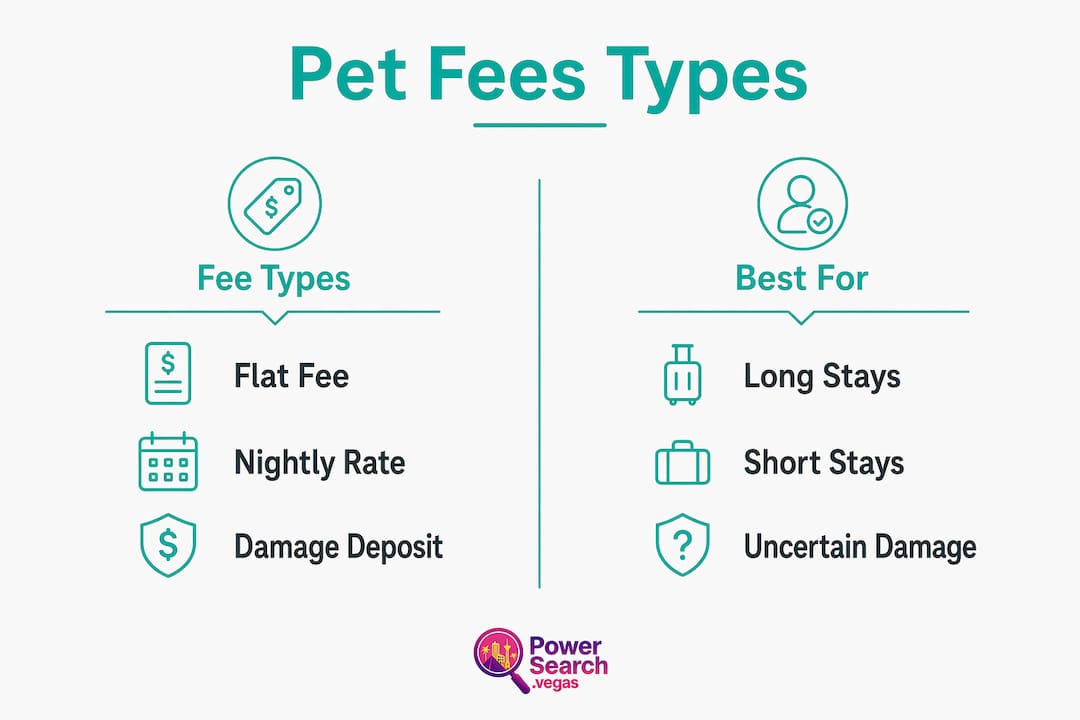
| Fee type | How it works | Best for |
|---|---|---|
| Flat per-stay fee | One charge regardless of nights | Longer stays (3+ nights) |
| Nightly pet fee | Charged each night of the stay | Short stays only |
| Damage deposit | Refundable if no damage occurs | Budget-conscious travelers |
| Non-refundable cleaning fee | Charged regardless of pet behavior | Standard at most properties |
Most hotels charge non-refundable pet cleaning fees even when pets behave perfectly. This is a service fee, not a damage deposit, and it will not be returned at checkout. Knowing that distinction before you arrive removes a lot of frustration.

La Quinta’s $40 per-stay cap is one of the most traveler-friendly fee structures in the industry. For a five-night stay, that is a fraction of what a nightly-fee property would charge. Always ask for a full fee breakdown before confirming your reservation.
Pro Tip: Ask the hotel to email you a written confirmation of all pet fees before your stay. This protects you from fee changes at checkout and gives you documentation if a dispute arises.
What areas of the hotel are actually open to your pet?
Dog owners often assume that a pet-friendly hotel means their dog goes everywhere they go. That assumption leads to some genuinely awkward moments at the pool deck or restaurant entrance.
Many hotels restrict pets from indoor public spaces including lobbies, fitness centers, pools, spas, and dining areas. Leash requirements and designated outdoor relief zones are standard. Your pet’s world inside the hotel is often limited to your room, the elevator, and a small patch of grass near a side exit.
Pet-friendly rooms are limited and purposely located near ground-level exits or elevators for noise control and outdoor access. Failing to book a designated pet room during reservation can result in being turned away at check-in, even if the hotel is technically pet-friendly. This is one of the most avoidable mistakes in pet travel.
Access rules also extend to shared outdoor spaces. Some properties offer dedicated dog runs or pet lounges, which is a jaw-dropping amenity when you find one. Others provide nothing beyond a strip of grass by the parking lot. Confirming exactly what access your pet has before arrival sets realistic expectations and helps you plan your daily routine around your dog’s needs.
Consequences for violating access rules range from a warning to additional cleaning fees to removal from the property. Hotels take these rules seriously because other guests are affected. Respecting the boundaries keeps the experience positive for everyone.
How to find, confirm, and document hotel pet policies
Getting accurate pet policy information requires more than a quick Google search. Here is a reliable process that travel industry experts recommend before every pet-friendly booking.
-
Start with a third-party resource. Sites like BringFido and Petswelcome aggregate pet policies across thousands of properties and flag breed restrictions, fee ranges, and amenity details. Use them to build your shortlist.
-
Verify on the official hotel website. Third-party data can be outdated. Always cross-check the specific property’s page for current rules. Look for a dedicated “pet policy” section rather than relying on a general brand FAQ.
-
Call the property directly. A two-minute phone call confirms room availability, current fee amounts, and any restrictions not listed online. Policies vary widely even within a brand, so property-level verification is non-negotiable.
-
Request written confirmation. Ask the hotel to send a confirmation email that includes all pet fees and rules. Save it to your phone before departure.
-
Build a pet travel cheat sheet. Travel industry experts recommend preparing a document that includes your pet’s vaccination records, behavior notes, and a copy of the confirmed hotel policy. This single document resolves most check-in disputes before they start.
If you are heading to Las Vegas specifically, Powersearch has a dedicated guide on Vegas hotels for large dogs that covers which Strip and off-Strip properties welcome bigger breeds, along with the documentation you should bring.
Key takeaways
Pet-friendly hotel policies are property-level contracts that define fees, access rules, and conduct requirements. Travelers who verify these details before booking avoid the most common and costly surprises.
| Point | Details |
|---|---|
| Policies are property-specific | Never assume brand-wide rules apply; always verify at the individual hotel. |
| Fee structures vary significantly | Flat per-stay fees save money on longer trips compared to nightly charges. |
| Pet rooms are limited | Book a designated pet room at reservation or risk being turned away at check-in. |
| Access is often restricted | Pets are typically banned from pools, spas, restaurants, and fitness centers. |
| Documentation prevents disputes | A pet travel cheat sheet with vaccination records and policy confirmation resolves most check-in issues. |
My honest read on navigating pet hotel policies
I have watched travelers walk into hotels with their dogs fully confident, only to spend the first twenty minutes of their trip arguing at the front desk. Every single time, the problem was the same: they assumed the brand policy they read online applied to that specific property.
Pet policies are set at the property level, not the brand level. A Hilton in one city may welcome your 60-pound Labrador without a second glance. A Hilton two miles away may cap pets at 25 pounds. That is not a technicality. That is the actual reality of how this industry works.
The brands worth knowing are Kimpton for zero-fee, zero-restriction travel, La Quinta for budget-conscious trips with a predictable fee cap, and Hilton for broad availability with variable rules. But even knowing those brands, you still need to call the property.
My strongest advice: treat the pet policy conversation the same way you treat confirming your room type. It is not optional prep. It is the prep. Your dog cannot advocate for itself at check-in, so you have to do it in advance.
— Mark
Plan your pet-friendly Vegas stay with Powersearch
Las Vegas has more pet-friendly hotel options than most travelers expect, and the price differences between properties are genuinely jaw-dropping once you start comparing.
Powersearch makes it easy to compare pet policies, fee structures, and room availability across Las Vegas hotels before you commit to a booking. The 2026 Las Vegas booking timing guide shows you exactly when to book to get the best rates, which matters even more when you are factoring in pet fees on top of room costs. Whether you are bringing a tiny terrier or a full-sized golden retriever, Powersearch helps you find the right fit without the guesswork. Start your search before the best pet-friendly rooms fill up.
FAQ
What does “pet-friendly” actually mean at a hotel?
“Pet-friendly” is not a standardized term. It ranges from a basic pet room with fees to full amenities like dog runs and pet concierge services, depending on the property.
Are pet fees refundable if my pet causes no damage?
Most pet cleaning fees are non-refundable regardless of your pet’s behavior. Only damage deposits are potentially refundable, and not every hotel offers them.
Do service animals count as pets under hotel policy?
Service animals are exempt from pet fees and restrictions. Emotional support animals, however, are typically treated as regular pets and subject to the same fees and rules.
How do I confirm a hotel’s pet policy before I arrive?
Call the specific property directly, request written confirmation of all fees and rules, and save that confirmation to your phone. Third-party sites like BringFido are a useful starting point but should always be verified with the hotel.
Can I leave my pet alone in a hotel room?
Most hotels require unattended pets to be crated. Leaving a pet unsupervised without a crate can result in additional fees or removal from the property.
No Comments