
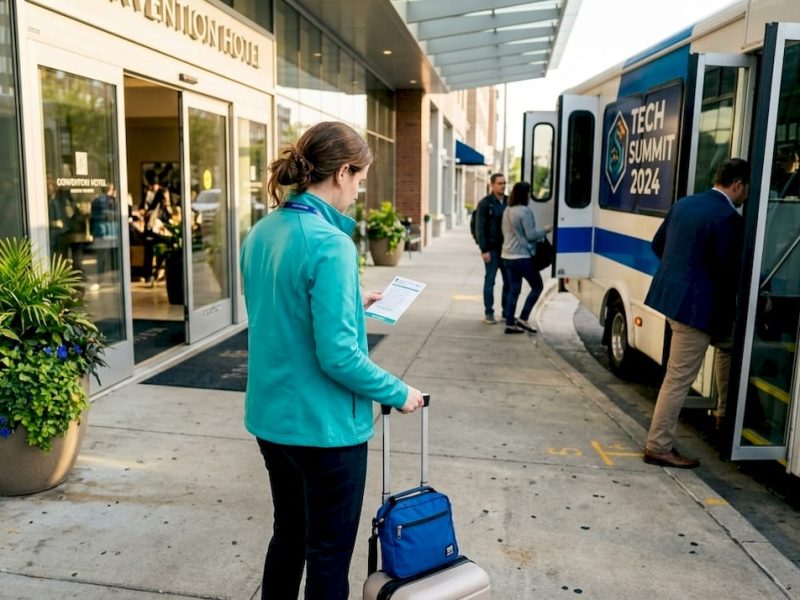
The Real Role of Hotel Shuttle to Convention Center
Disclosure: This post may contain affiliate links. We may earn a commission for purchases made through links in this post, at no cost to you.
You’ve booked your hotel, registered for the convention, and packed your badge lanyard. Then the question hits: how exactly does getting from point A to point B work? The role of hotel shuttle to convention center is one of those topics that looks simple until you’re standing on the wrong curb at 7:45 AM wondering where your ride went. These shuttles are not the free-roaming, on-demand airport transfers many travelers expect. They operate on their own logic entirely, and understanding that logic before your event can genuinely change how the whole trip feels.
Table of Contents
- Key Takeaways
- The role of hotel shuttle to convention center explained
- How shuttles make convention travel less chaotic
- Limitations worth knowing before you go
- Shuttle vs. other ways to get there
- What I’ve learned from years of getting this wrong first
- Plan your convention transport with Powersearch
- FAQ
Key Takeaways
| Point | Details |
|---|---|
| Shuttles run on fixed schedules | Convention shuttles follow set departure times aligned with event hours, not traveler demand. |
| Hotel block booking matters | Staying in an official conference hotel block is the most reliable way to access shuttle service. |
| Walkable hotels are excluded | Hotels close enough to walk often receive no shuttle coverage, so distance actually matters. |
| Boarding location specifics count | Wrong pickup spots can cause you to miss your shuttle, so always check posted instructions. |
| Rideshare is the backup plan | During peak times, rideshare surge pricing can spike significantly, making shuttle access even more valuable. |
The role of hotel shuttle to convention center explained
Think of the convention hotel shuttle not as a taxi but as a very specific bus line that exists for exactly one purpose: moving attendees between their official lodging and the event space at predictable, high-traffic moments. That distinction changes everything about how you use it.
Event organizers design shuttle programs around predictable attendee flows during peak arrival and departure windows, not as general-purpose ground transport. The 2026 International Builders’ Show in Orlando, for example, offers complimentary shuttles between official hotels and the Orange County Convention Center, running from 6:30 AM to 6:00 PM each day, February 17 through 19. That is a defined window, a defined route, and a defined purpose.
ATD26 in Los Angeles takes a similar approach. Free shuttle service connects the Los Angeles Convention Center with non-walkable conference hotels, and the routes and arrival times are publicly posted in advance. Off-site events within three miles? No shuttle provided for those. The service exists to solve one specific logistics problem, not every transportation need an attendee might have.
Here is what that means in practice for you:
- Shuttles run between official conference hotels and the convention hall, not to restaurants, airports, or nearby attractions.
- Service times align with session schedules, typically early morning departures and late afternoon or early evening returns.
- Accessible shuttle options are often available but may require advance notice, such as a dedicated phone line at IBS 2026.
- Routes are looped and fixed, not responsive to individual traveler timing.
Pro Tip: Download or screenshot the shuttle schedule PDF from the official event website the day before your convention opens. Schedules occasionally update, and the printed version you grabbed two weeks ago might already be outdated.
How shuttles make convention travel less chaotic
Multi-day conventions create a transportation puzzle that compounds over time. Day one might feel manageable. By day three, when you are tired, carrying a bag full of swag, and running five minutes late for a keynote, the difference between having a reliable shuttle and scrambling for a rideshare is enormous.
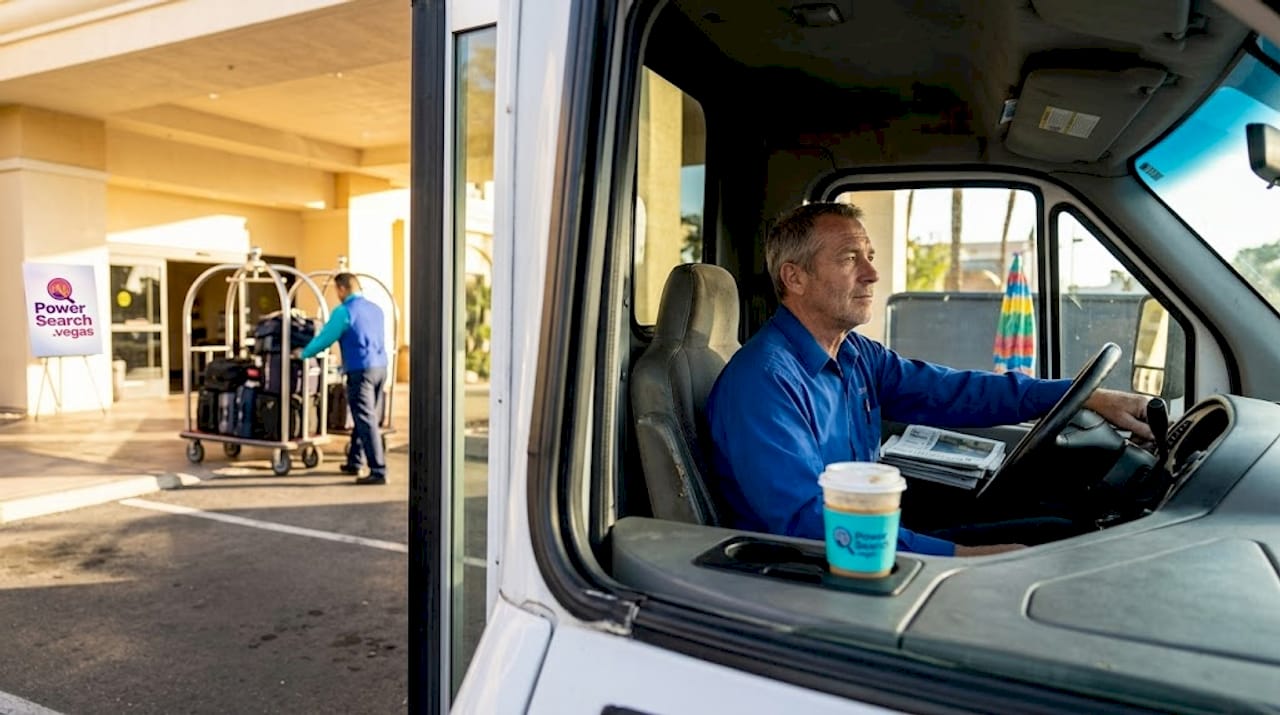
Shuttle services reduce transportation coordination friction by consolidating the daily commute between hotel and convention center into a known quantity. You know what time the bus leaves. You know where it drops you off. That kind of predictability is genuinely stress-reducing across a four-day event.
Cost is another real factor. During peak convention hours, rideshare surge pricing can spike to two or three times the normal rate. Every attendee is opening the same apps at the same time, headed to the same place. Missing a scheduled shuttle can push you directly into that surge window, turning a free ride into a $30 to $50 Uber. Multiply that across several days and the math adds up fast.
“Reliable shuttle communication is central to guest satisfaction. Published routes, consistent timing, and accessible options reduce uncertainty and significantly improve the travel experience for attendees.”
Mobility for Travel on shuttle optimization
Accessibility is also a dimension that often gets overlooked in general travel advice. When events like IBS offer dedicated accessible shuttle options with a specific phone line for booking, it signals that the shuttle program is designed to serve all attendees, not just those who can walk quickly or navigate crowded curbs. That matters enormously for travelers with mobility considerations.
Pro Tip: If you know your session schedule, plan your shuttle ride around the second or third departure rather than the very first. Early morning shuttles tend to fill fastest, especially on opening day.
Limitations worth knowing before you go
The benefits of shuttle services are real, but they come with genuine trade-offs. Knowing these ahead of time means you plan around them rather than discovering them at the worst possible moment.
Convention hotel shuttles operate on looped, fixed schedules that are fundamentally different from airport shuttles, which often run every 15 to 20 minutes. A convention shuttle might depart your hotel twice in the morning and twice in the evening. The Hilton Orlando, for instance, runs a schedule with very limited daily departures. Miss one, and you could wait over an hour or pay for a rideshare at surge rates.
Here is a comparison that shows where shuttle services shine and where they fall short:
| Factor | Hotel Shuttle | Rideshare |
|---|---|---|
| Cost | Free (with official hotel booking) | Variable, often surging during peak hours |
| Reliability | High during scheduled times | Inconsistent during peak convention demand |
| Flexibility | Low (fixed times and routes) | High (depart whenever) |
| Accessibility | Typically available with advance request | Depends on driver and vehicle type |
| Stress level | Low once you know the schedule | Higher during peak periods |
Beyond timing, boarding locations add another layer of complexity. Boarding spots can differ by hotel entrance or convention hall wing, and the wrong curbside pickup can mean a missed session. This is not theoretical. At large venues like the Orange County Convention Center, the difference between the north and south entrance drops can be a 10-minute walk inside a massive building.
A few things every convention attendee should do before the event opens:
- Confirm your hotel is on the official shuttle list before you book.
- Check boarding instructions on the event website 24 to 48 hours before you travel.
- Note the return shuttle times and build buffer time into your day, especially for evening events.
- Have a rideshare app loaded with payment information as your backup, just in case.
Shuttle vs. other ways to get there
Convention center transport options have expanded significantly. Shuttle services for convention attendees remain one of the most cost-effective choices, but they are not always the right one for every situation.
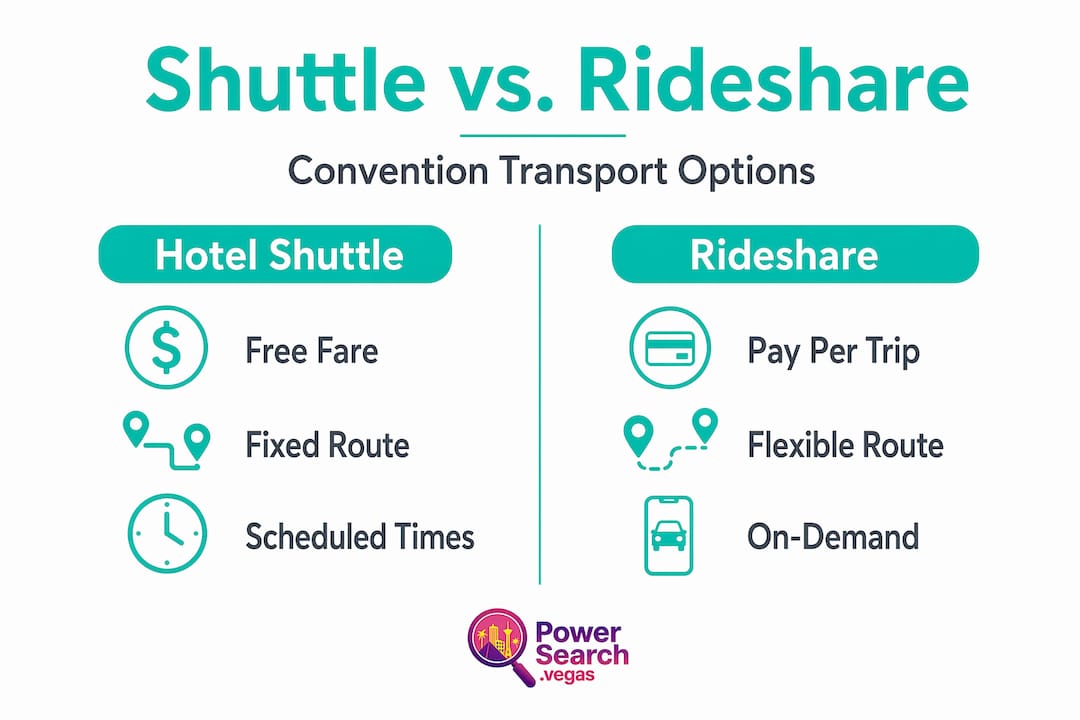
Hotel shuttle wins when you are staying in an official block hotel, the schedule aligns with your day, and you want zero transportation cost. It is the most stress-free option when it works.
Rideshare wins when you need flexibility. Early breakfast meeting before the shuttle runs? Late networking dinner that runs past return service? Rideshare fills that gap. The trade-off is cost and unpredictability during peak periods. Surge pricing during conventions can make a short trip feel disproportionately expensive.
Pre-booked private transfers make sense for groups traveling together, executives on tight schedules, or anyone attending a corporate offsite event where time is a non-negotiable. A private car booked in advance avoids surge pricing entirely and offers door-to-door precision that no shuttle loop can match.
Walking is the underrated option that many attendees dismiss too quickly. If your hotel is genuinely close to the convention center, walking not only saves money but gives you mental decompression time between sessions. The catch is that walkable hotels are excluded from shuttle routes entirely, which means you save money on transport but need to be comfortable walking with gear in varying weather.
Public transit varies wildly by city. In some convention cities, light rail or metro lines connect major hotel corridors directly to convention facilities. In others, public transit adds connection complexity that erases any time savings. Research this option specifically for your city before committing to it.
The smartest approach for most multi-day convention attendees is to use the free hotel shuttle as the primary option for standard session days, keep rideshare as a flexible backup, and pre-book a private transfer for any time-sensitive commitments. Understanding corporate travel program benefits can also point you toward reimbursement structures that cover rideshare costs when shuttles do not fit the schedule.
What I’ve learned from years of getting this wrong first
I used to treat convention shuttles the way I treat airport buses. Show up, wait a bit, and something shows up. That approach has cost me at least a dozen missed session openings and one particularly memorable morning where I paid $47 for a four-minute Uber ride because I assumed the shuttle ran every 20 minutes. It does not.
What I’ve found actually works is treating the shuttle schedule as a hard constraint, the way you treat a flight departure. I block out shuttle times in my calendar alongside session times. If a shuttle leaves at 7:15 AM and I need to be at a 9:00 AM opening, I am at that curb at 7:10. Full stop.
I’ve also learned that hotel selection is a transportation decision, not just a comfort decision. Booking within official hotel blocks guarantees shuttle access and tends to simplify boarding. The years I tried to save $30 a night by staying slightly outside the block, I consistently spent more than that in rideshares and lost time I never got back.
The other thing nobody tells you is that event organizers who publish clear, updated shuttle information make a jaw-dropping difference. When routes, times, and boarding points are posted and updated, attendees relax. When that information is vague or buried on page seven of a PDF, frustration builds fast and people abandon the shuttle entirely, which adds to road congestion and rideshare demand for everyone.
Know the schedule. Stay in the block. Check the boarding location the night before. That three-step habit has made every convention trip since feel significantly smoother.
— Mark
Plan your convention transport with Powersearch
Getting your hotel and shuttle situation sorted before you land is one of the smartest moves any convention-goer can make. Powersearch makes that process dramatically easier for travelers heading to Las Vegas events and conventions.
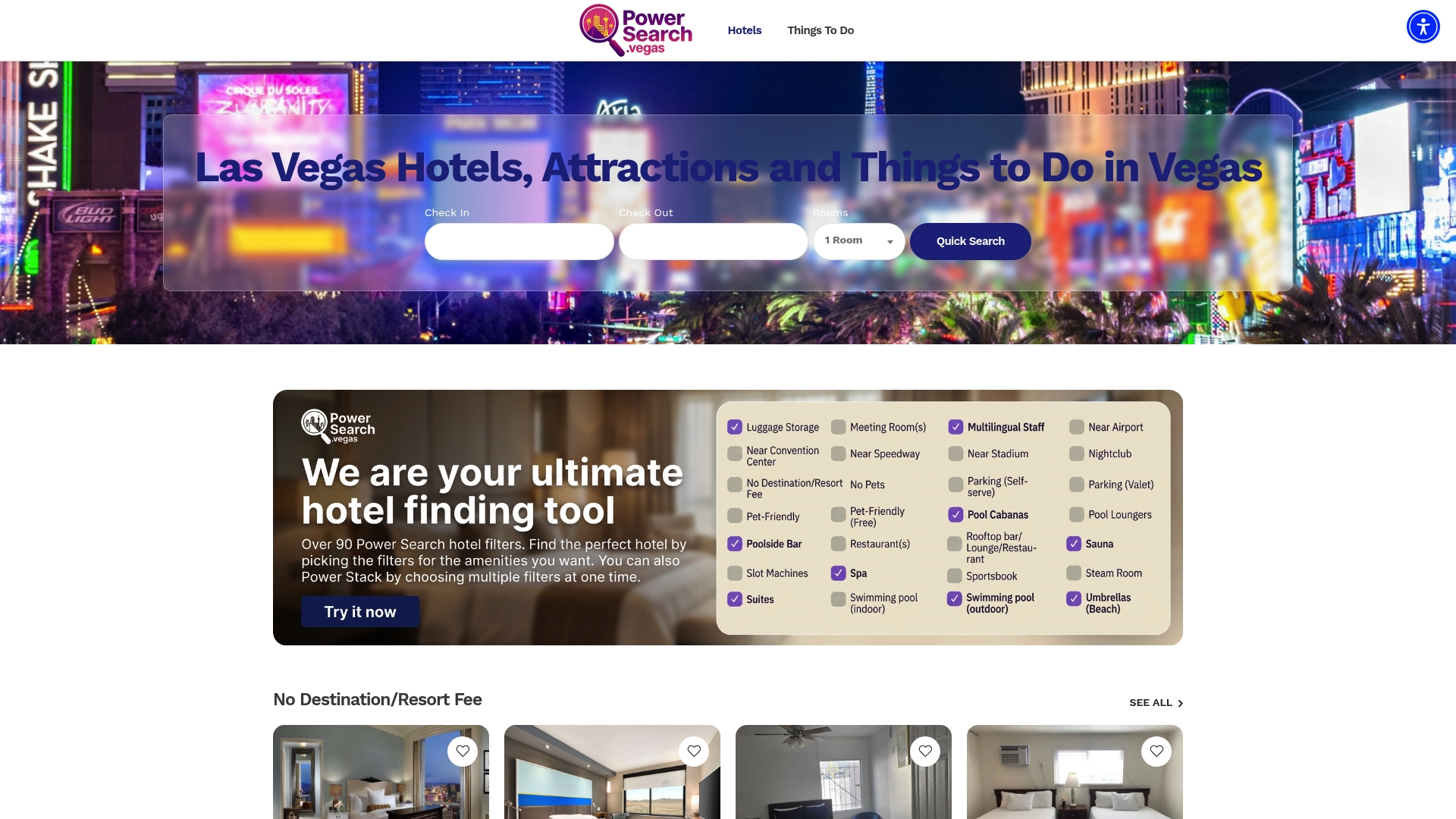
At Powersearch, you can search and compare hotels by location, amenities, and proximity to major Las Vegas convention facilities so you always know whether a property falls within an official shuttle zone or close enough to walk. No more guessing and no more scrambling at the last minute. Whether you are looking for a luxury resort or a budget-friendly option with solid transport access, Powersearch gives you the filters and details to make an informed call early. Start planning now, lock in your accommodations, and arrive at your convention ready to hit the floor running.
FAQ
What is the main purpose of a hotel shuttle to a convention center?
The role of hotel shuttle to convention center is to move attendees between official conference hotels and the event venue on a fixed schedule during peak event hours. These shuttles are free with qualifying hotel bookings and designed to reduce traffic and individual transport costs across multi-day events.
Are all hotels near a convention center included in shuttle service?
No. Hotels within walking distance of the convention center are typically excluded from shuttle routes. Only non-walkable properties within the official conference hotel block usually receive shuttle service, so hotel selection directly affects your access.
What happens if you miss the hotel shuttle at a convention?
Missing a scheduled shuttle often means waiting for the next departure, which can be an hour or more away. Most attendees turn to rideshare as a backup, though surge pricing during peak convention hours can make that option significantly more expensive.
How do I find out where to board the shuttle at a large convention center?
Check the official event website for posted boarding instructions within 24 to 48 hours of the event opening. Boarding locations can vary by hotel entrance or convention hall wing, and using the wrong pickup spot is a common source of delays.
Is rideshare better than the hotel shuttle for convention travel?
It depends on your schedule. Hotel shuttles win on cost and predictability during scheduled windows. Rideshare wins on flexibility, particularly for early morning or late evening travel when shuttles do not run. Using both strategically across a multi-day event gives you the best of both options.
No Comments