
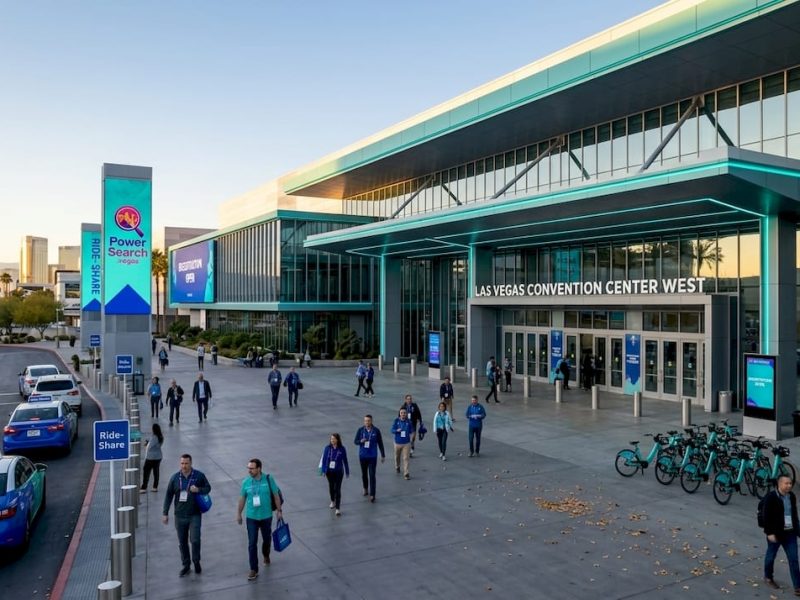
The Role of Las Vegas Convention Center for Planners
Disclosure: This post may contain affiliate links. We may earn a commission for purchases made through links in this post, at no cost to you.
The Las Vegas Convention Center is defined as the largest and most operationally sophisticated event venue in the United States, owned and operated by the Las Vegas Convention and Visitors Authority (LVCVA) to host major conventions, trade shows, and exhibitions. Known in the industry as the LVCC, it functions as the backbone of Las Vegas’s business tourism economy, drawing hundreds of thousands of professionals to Southern Nevada each year. For event planners and business professionals, understanding how the LVCC works, what it offers, and how it fits into the broader Las Vegas event venue ecosystem is the difference between a good event and a jaw-dropping one. This guide breaks down everything you need to know, from the $600 million renovation completed in 2025 to 2026 attendance projections and practical planning strategies.
What is the role of Las Vegas Convention Center in global events?
The LVCC serves as the primary anchor for Las Vegas trade shows, conventions, and large-scale exhibitions, a function it has performed for decades while continuously expanding its capacity. The venue’s role extends well beyond providing square footage. It acts as a full-service event infrastructure, coordinating logistics, technology, wayfinding, and attendee flow for events that can involve tens of thousands of participants across multiple halls simultaneously. Sustained investments and large-scale renovations place the LVCC at the forefront of global event venues, reinforcing Las Vegas as a top destination for business gatherings.
The convention center significance here goes beyond prestige. The LVCVA’s destination marketing operation actively promotes Las Vegas as a meetings and special events destination, driving business travel to Southern Nevada year-round. That means when you book the LVCC, you are not just reserving space. You are plugging into a fully coordinated hospitality and marketing machine designed to fill your event with the right attendees.
What are the key features and recent renovations at LVCC?
Between 2023 and 2025, the LVCC underwent a $600 million renovation covering 3.2 million square feet across the Central, North, and South Halls, plus a brand-new 100,000-square-foot Grand Lobby. The transformation introduced advanced digital wayfinding, modernized building systems, and energy-efficient infrastructure throughout the campus. Natural light floods the updated interiors, and the overall attendee experience feels less like navigating a warehouse and more like moving through a world-class facility designed with purpose.
What makes this renovation particularly impressive is that the LVCC maintained continuous operations throughout the entire construction period. Anchor shows like CES kept running without interruption, a feat of project management that few venues of this scale could pull off. The renovation phases were strategically staged to protect key show calendars, preserving revenue and industry trust simultaneously.
Here is what the renovation delivered for event planners specifically:
- A 100,000-square-foot Grand Lobby that serves as a central orientation point for attendees arriving from multiple entry points
- Climate-controlled enclosed corridors connecting North and South Halls, eliminating outdoor routing in Las Vegas summer heat
- Advanced digital wayfinding systems that reduce staffing needs for directional guidance
- Updated technology infrastructure supporting high-density Wi-Fi, AV integration, and exhibitor connectivity
- Energy-efficient systems that reduce operational costs and support sustainability goals for corporate events
Pro Tip: If your event runs between June and September, the new climate-controlled corridors between halls are a genuine operational advantage. Attendee fatigue from outdoor exposure in 110-degree heat is a real planning problem that this renovation directly solves.
How does LVCC’s role impact trade show logistics and scale?
The LVCC covers 4.6 million square feet of exhibit space across the full campus during major events, a number that includes outdoor areas and parking zones that planners often overlook when calculating circulation needs. CES 2025 demonstrated this scale in action, generating $381.2 million in economic impact for Southern Nevada while utilizing virtually every corner of the campus. Gary Shapiro of the Consumer Technology Association noted that the venue’s role extends beyond raw size to supporting the technological complexity and logistical demands of a show with thousands of exhibitors.
Planning a multi-hall event at the LVCC requires thinking about the campus as a city, not a building. Attendee routing between Central, North, and South Halls involves thousands of people moving simultaneously, and the newly enclosed corridor between North and South Halls changes staffing and signage strategies in ways that planners need to account for in their floor plans. The digital wayfinding system reduces the number of directional staff you need to deploy, but it requires coordination with LVCC’s technology team during setup.

Pro Tip: Do not rely solely on indoor square footage figures when scoping your event. The 4.6 million square feet includes outdoor and parking areas that become critical circulation zones during peak attendance periods. Build your logistics plan around the full campus footprint.
The impact of convention centers of this scale on event execution is profound. Multi-hall events with thousands of exhibitors require precise coordination of freight loading, exhibitor move-in schedules, and attendee access windows. The LVCC’s operational team has refined these processes over decades of hosting Las Vegas trade shows, and tapping into their institutional knowledge early in your planning cycle pays dividends on show day.
What economic and business impacts does the LVCC generate?
The numbers tell a compelling story about convention center significance in Las Vegas. In 2026, the LVCC is projected to host approximately 1.2 million trade show attendees, up from 1.0 million in 2025. That represents a post-pandemic attendance high and reflects the sustained demand for Las Vegas as a premier event destination. For context, that volume of business travelers generates enormous downstream spending on hotels, restaurants, entertainment, and transportation across Southern Nevada.
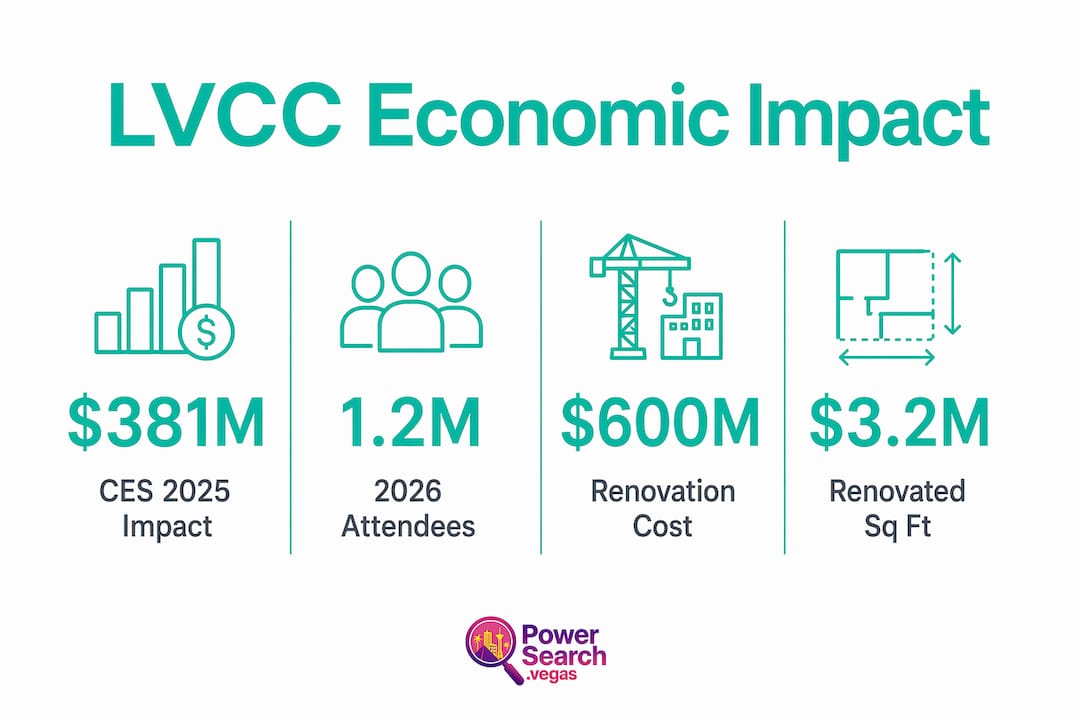
The benefits of convention attendance extend well beyond the event floor. The LVCC’s packed meetings calendar supports mid-week hotel occupancy in a city that would otherwise see significant weekday softness. Business travelers who come for Strip hotel stays during conventions also spend on leisure, dining, and shows, creating a multiplier effect that benefits the entire hospitality ecosystem.
| Economic indicator | 2025 to 2026 data |
|---|---|
| CES 2025 economic impact | $381.2 million for Southern Nevada |
| 2026 trade show attendee projection | 1.2 million to 1.23 million attendees |
| 2025 trade show attendees | Approximately 1.0 million |
| Renovation investment | $600 million across 3.2 million square feet |
The LVCVA funds improvements through room tax revenue, meaning the hospitality sector directly reinvests in the infrastructure that drives its own occupancy. This self-reinforcing model keeps the LVCC competitive with other major convention destinations like Orlando’s Orange County Convention Center and Chicago’s McCormick Place.
How should event planners leverage LVCC in their event strategy?
The LVCC calendar is one of the most competitive in the world, and securing your preferred dates requires planning well in advance. Here is a practical framework for maximizing your event’s success at this venue:
-
Book early and align with anchor shows. The LVCC’s calendar revolves around anchor events like CES in January, CONEXPO in March, and NAB Show in April. Aligning your scheduling with periods of high facility readiness, rather than competing directly with anchor shows for dates, gives you access to a fully prepared venue and a hospitality ecosystem primed for business travelers.
-
Coordinate hotel room blocks through LVCVA. The LVCVA’s group sales team manages room block negotiations with Strip properties and off-Strip hotels. Engaging them early in your planning process unlocks preferred rates and ensures your attendees have accommodation options at every price point.
-
Plan your hall configuration around the connected corridors. The new climate-controlled connections between halls change how attendees move through the campus. Events that span multiple halls should design their programming flow to take advantage of this indoor routing, reducing outdoor exposure and improving the overall attendee experience.
-
Build your logistics timeline around LVCC’s operational calendar. The venue’s freight and move-in scheduling is highly structured. Understanding the specific windows available for your event and coordinating with LVCC’s operations team early prevents costly delays during setup.
-
Use the digital wayfinding infrastructure. The LVCC’s new wayfinding system can be integrated with your event’s mobile app and signage strategy. This reduces the staffing burden for directional guidance and creates a more polished experience for first-time attendees.
Pro Tip: Check the Las Vegas weekly hotel rate guide before finalizing your event dates. Hotel rates spike dramatically during anchor shows, and even a one-week shift in your schedule can save your attendees hundreds of dollars per night.
How does LVCC integrate with Las Vegas’s hospitality ecosystem?
The LVCC does not operate in isolation. It sits at the center of a tightly integrated network of hotels, transportation systems, and entertainment venues that collectively make Las Vegas the world’s most complete event destination. The LVCVA manages both the convention center and the city’s destination marketing, creating a unified strategy that benefits every event hosted at the venue.
The Vegas Loop transportation system connects LVCC halls with key Strip resorts, moving attendees efficiently between the convention center and their hotels. Expansions to this Tesla-powered people-mover network are planned, which will extend connectivity further along the Strip and reduce surface-level traffic congestion during peak event periods. For planners, this means your attendees can move between sessions and hotel meetings without the friction of surface transportation.
The Strip hotels themselves offer complementary meeting spaces that work in tandem with the LVCC. Properties like the Venetian Resort, MGM Grand, and Caesars Palace each operate large convention facilities that can host breakout sessions, private meetings, and evening events while your main show runs at the LVCC. This distributed model gives planners extraordinary flexibility in designing multi-venue event experiences.
| Feature | LVCC | Strip resort convention centers |
|---|---|---|
| Primary function | Large-scale trade shows and exhibitions | Breakout sessions, private meetings, hospitality events |
| Scale | 4.6 million sq ft campus | 100,000 to 2 million sq ft per property |
| Transportation access | Vegas Loop, rideshare, shuttle | Direct hotel access, walkable for guests |
| LVCVA coordination | Directly managed | Coordinated through group sales partnerships |
The digital hospitality trends shaping 2026 events align well with what the LVCC now offers. High-density connectivity, digital wayfinding, and integrated event technology are table stakes for modern conventions, and the renovated venue delivers all three.
Key takeaways
The LVCC’s role as a premier global event venue is defined by its scale, operational sophistication, and deep integration with Las Vegas’s hospitality and transportation infrastructure.
| Point | Details |
|---|---|
| Scale and renovation | The $600 million renovation modernized 3.2 million sq ft and added a 100,000 sq ft Grand Lobby. |
| Economic impact | CES 2025 alone generated $381.2 million for Southern Nevada, with 1.2 million attendees projected for 2026. |
| Climate-controlled corridors | Enclosed connections between halls improve summer logistics and reduce outdoor attendee exposure. |
| Planning lead time | Anchor show competition makes early booking and LVCVA coordination non-negotiable for planners. |
| Ecosystem integration | The Vegas Loop and Strip resort meeting spaces create a distributed event infrastructure unique to Las Vegas. |
Why LVCC’s operational depth changes everything for planners
I have spent years watching event planners walk into the LVCC for the first time and immediately recalibrate their assumptions. The venue’s sheer scale is obvious from the outside, but what hits different once you are inside is the operational depth. The LVCC is not just a big room. It is a machine with decades of institutional knowledge baked into every loading dock schedule, every wayfinding decision, and every technology integration.
The $600 million renovation reflects something important: the LVCVA understands that size alone does not win. Orlando and Chicago have size. What Las Vegas has is a venue that treats operational excellence as a competitive advantage. The decision to stage renovation phases around anchor shows like CES was not just logistically clever. It was a statement about how seriously the LVCC takes its relationships with major event clients.
My honest advice for planners is this: treat the LVCVA’s group sales and operations teams as partners from day one, not vendors you engage at the end of your planning cycle. The planners who get the best outcomes at the LVCC are the ones who tap into the venue’s institutional knowledge early, align their logistics with the venue’s operational rhythms, and design their attendee experience around the campus as a whole, not just the exhibit floor. The venue will reward that approach with a level of execution that is genuinely hard to replicate anywhere else in the world.
— Mark
Plan your Las Vegas event with Powersearch
Whether you are organizing a trade show for 5,000 attendees or a corporate conference for 500, getting your hotel strategy right is as important as your venue strategy. Powersearch gives event planners and business professionals a powerful way to search, compare, and book Las Vegas accommodations that align with your event’s location, budget, and attendee needs. From luxury Strip properties steps from the LVCC to budget-friendly options for extended planning teams, Powersearch puts the full Las Vegas hospitality picture in one place. Stop piecing together hotel options from a dozen different sites and start planning smarter.
FAQ
What does the Las Vegas Convention Center do?
The Las Vegas Convention Center serves as the primary venue for large-scale conventions, trade shows, and exhibitions in Las Vegas, operated by the LVCVA to drive business tourism and economic activity across Southern Nevada.
How big is the Las Vegas Convention Center?
The LVCC covers 4.6 million square feet across its full campus during major events, including Central, North, and South Halls, plus outdoor and parking areas used for large-scale show logistics.
What was the LVCC renovation and when did it finish?
The LVCC completed a $600 million renovation between 2023 and 2025, modernizing 3.2 million square feet and adding a 100,000-square-foot Grand Lobby with digital wayfinding and climate-controlled hall connections.
How many attendees does the LVCC host annually?
The LVCC is projected to host approximately 1.2 million trade show attendees in 2026, up from 1.0 million in 2025, reflecting a post-pandemic attendance high driven by sustained demand for Las Vegas events.
How do I book the Las Vegas Convention Center for an event?
Event planners book the LVCC through the LVCVA, which also coordinates group hotel room blocks and destination marketing support to maximize attendance and attendee experience for hosted events.
No Comments