

Why Las Vegas Attracts Corporate Events: 2026 Guide
Disclosure: This post may contain affiliate links. We may earn a commission for purchases made through links in this post, at no cost to you.
Las Vegas is defined as the world’s most infrastructure-ready corporate event destination, drawing 6 million meeting attendees annually across 22,000 to 24,000 meetings. No other city combines venue scale, lodging density, entertainment variety, and logistical precision at this level. For corporate event planners and executives, understanding why Las Vegas attracts corporate events is not just a matter of curiosity. It is the foundation of a smarter booking decision. The city’s recent $600 million investment in the Las Vegas Convention Center alone signals that Vegas is not coasting on reputation. It is actively building the future of business events.
Why Las Vegas attracts corporate events better than any other city
Las Vegas holds the title of No. 1 trade-show destination in the United States, a position it has maintained for decades. That legacy is not accidental. The city has built an event ecosystem where every component, from venue capacity to hotel supply to AV staffing, is calibrated for high-volume, high-stakes gatherings. Steve Hill, CEO of the Las Vegas Convention and Visitors Authority (LVCVA), puts it plainly: Las Vegas’s real advantage is meeting-destination performance at scale, not just its entertainment reputation. That distinction matters enormously when you are responsible for 500 or 5,000 attendees.
The reasons for corporate events in Las Vegas converge around one core truth: the city removes friction at every stage of event planning. Venues are large enough to absorb last-minute attendance surges. Hotels are plentiful enough to accommodate diverse budgets. And the service workforce is experienced enough to execute flawlessly, even under pressure. For planners who have dealt with the chaos of under-resourced destinations, that reliability is jaw-dropping in the best possible way.
What makes Las Vegas convention venues stand out for corporate planners?
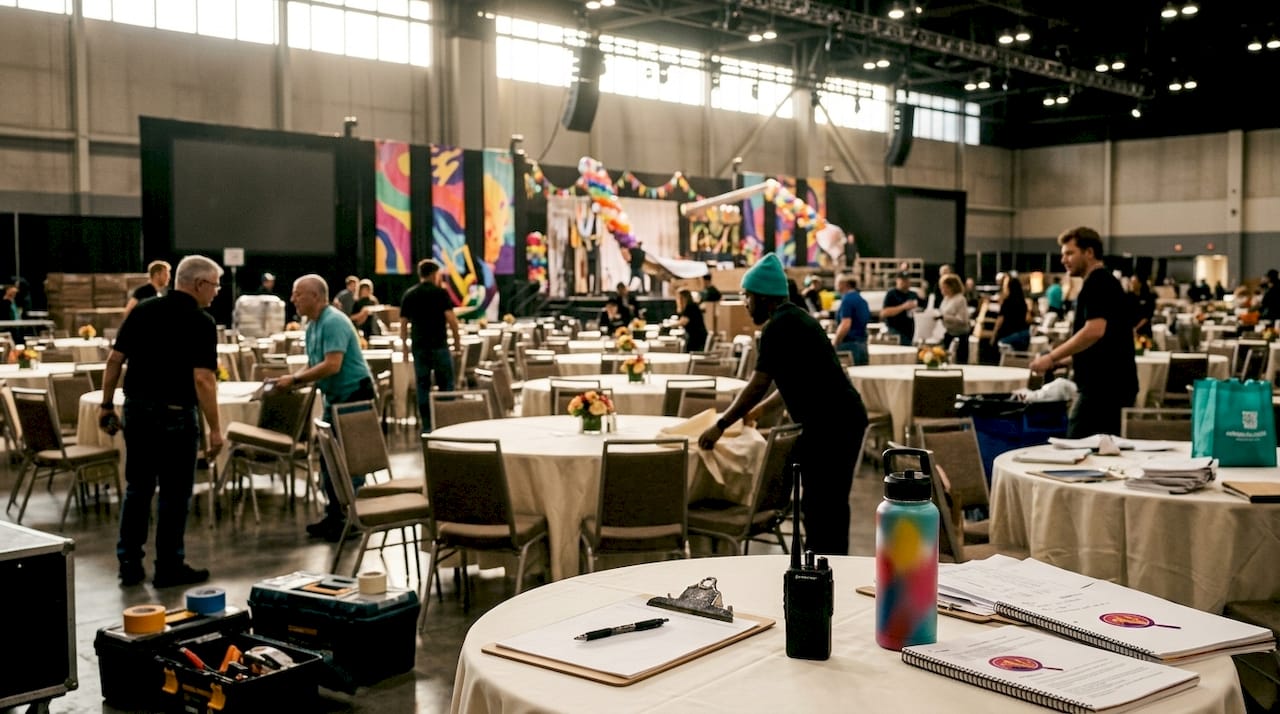
The Las Vegas Convention Center (LVCC) is the anchor of the city’s event infrastructure, and its $600 million renovation completed ahead of 2026 is a direct investment in planner confidence. The renovation expanded capacity, improved attendee flow, and modernized the technology backbone that powers everything from registration to live streaming. The LVCC alone is projected to welcome approximately 1.2 million trade show attendees in 2026. That number reflects not just scale, but sustained demand from organizations that return year after year.
Beyond the LVCC, Las Vegas offers a jaw-dropping variety of venue types. Major resort properties like MGM Grand, Caesars Palace, and the Venetian Resort each contain hundreds of thousands of square feet of dedicated meeting space, often connected directly to hotel towers. This integration means attendees can move from a general session to a breakout room to their hotel room without stepping outside. For planners managing tight schedules, that kind of proximity is a genuine operational advantage.
| Venue Type | Best For | Key Advantage |
|---|---|---|
| Las Vegas Convention Center | Large trade shows, expos | 4.6M sq ft, post-renovation tech upgrades |
| Resort-integrated ballrooms | Executive summits, galas | Hotel-to-meeting-room connectivity |
| Boutique hotel meeting spaces | Intimate board retreats | Personalized service, curated atmosphere |
| Outdoor resort venues | Team-building, receptions | 300+ sunny days annually |
Pro Tip: Book resort-integrated venues for events where attendee fatigue is a concern. Eliminating outdoor transit between sessions measurably improves engagement and punctuality.
How does accessibility drive corporate event success in Las Vegas?
Harry Reid International Airport sits 10 to 15 minutes from the Las Vegas Convention Center under normal traffic conditions, making it one of the most airport-proximate convention destinations in the world. That proximity translates directly into higher attendance rates and lower no-show risk. When attendees know they can land, check in, and be seated in a general session within 45 minutes, the friction of travel disappears. The city’s hotel proximity options near major venues are equally well-documented, giving planners a clear picture of where to place room blocks.
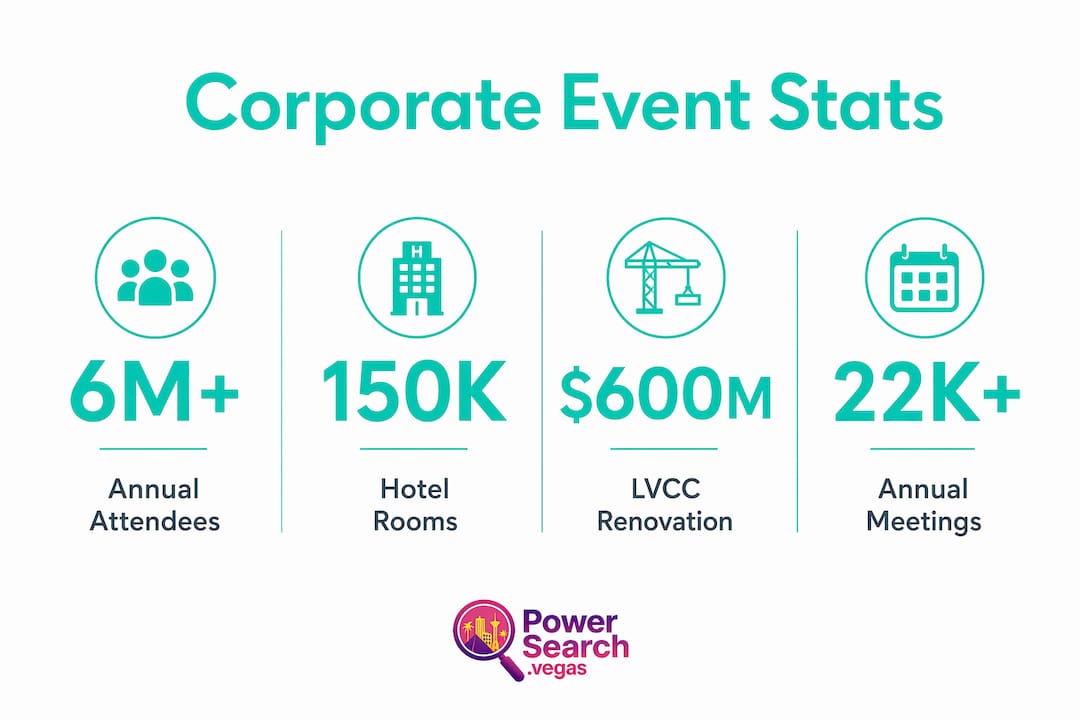
Las Vegas offers over 150,000 hotel rooms citywide, many of them directly connected to or within walking distance of major event venues. The LVCVA’s group sales data for February through March 2026 projects 480,000 hotel room nights booked for corporate events alone. Remarkably, 38 percent of those bookings come from groups new to Las Vegas, which signals that the city is actively expanding its corporate client base rather than relying on repeat business. That growth reflects genuine confidence from planners who are choosing Vegas for the first time.
Practical logistics deserve attention here, because the airport-to-venue drive can stretch to 40 or more minutes during peak event periods. Planners who treat the 10-minute average as a guarantee will create scheduling problems for VIP speakers and keynote presenters. Using group-sales booking pipelines to forecast hotel availability is equally critical, since room block windows tighten fast when multiple large events overlap on the calendar.
Pro Tip: Pre-book rideshare or shuttle services for all speakers and executives arriving within 48 hours of your event opening. Buffer at least 30 extra minutes during any period when CES, NAB Show, or another major convention is running concurrently.
What role does entertainment play in corporate event appeal?
Las Vegas events achieve 10 to 15 percent higher attendance than comparable events in other cities, and the destination’s entertainment ecosystem is a primary driver. Attendees who might skip a conference in a generic convention city will book flights to Vegas because the trip itself feels worth making. The Strip transforms into one giant playground after business hours, and that energy carries back into the meeting room the next morning. People arrive more engaged, more open to connection, and more willing to extend their stay.
The entertainment options available for corporate programming are genuinely mind-bending in their variety. Here are four categories that planners consistently leverage for business objectives:
- Private show buyouts. Productions like Cirque du Soleil’s resident shows at MGM Grand or comedy residencies at major casinos can be booked exclusively for corporate groups, creating a shared experience that no generic team-building exercise can replicate.
- Culinary experiences. Las Vegas hosts more celebrity chef restaurants per square mile than almost any city in the world, including properties from Gordon Ramsay, José Andrés, and Wolfgang Puck. Private dining buyouts double as networking events with a natural conversation starter built in.
- Outdoor team-building. With over 300 days of sunshine annually, activities like desert off-roading, golf at courses designed by Jack Nicklaus, and rooftop receptions are feasible year-round. That flexibility gives planners options that indoor-only destinations simply cannot match.
- Incentive travel integration. Pairing a corporate conference with an incentive travel component amplifies both attendance and post-event performance metrics. Vegas’s entertainment density makes it the most natural city for this kind of hybrid programming.
How does Las Vegas’s service ecosystem reduce operational risk?
The continuous hosting of mega-events in Las Vegas stresses and refines every layer of the service ecosystem, from AV technicians to union labor to logistics coordinators. This is not a city where event staff are learning on the job. The workforce has executed CES, the Consumer Electronics Show with over 130,000 attendees, alongside NAB Show, MAGIC, and dozens of other major conventions every single year. That repetition produces a level of operational precision that smaller-event cities simply cannot develop.
For corporate planners, this translates into concrete risk reduction:
The AV infrastructure in Las Vegas venues is among the most sophisticated in the world, with redundant systems, experienced crews, and rapid troubleshooting protocols built from years of high-stakes production. Logistics vendors who specialize in convention freight, exhibit installation, and on-site catering operate at volumes that make them genuinely efficient rather than just adequate. Labor availability is rarely a constraint, even for events that scale up unexpectedly. And the city’s hotel concierge and event coordination teams are trained to handle the specific demands of corporate groups, not just leisure travelers.
“Las Vegas’s advantage is meeting-destination performance at scale.” Steve Hill, CEO, Las Vegas Convention and Visitors Authority
The contrast with second-tier convention cities is stark. A city that hosts two or three large events per year cannot develop the institutional muscle memory that Las Vegas has built over decades. When something goes wrong at a Vegas event, and something always does, the local team has seen it before and knows exactly how to fix it.
Key takeaways
Las Vegas is the top corporate event destination because it combines unmatched venue scale, 150,000-plus hotel rooms, airport proximity, and a battle-tested service ecosystem that reduces operational risk for planners.
| Point | Details |
|---|---|
| Venue scale and variety | LVCC’s $600M renovation and resort-integrated spaces serve events of every size. |
| Accommodation depth | Over 150,000 hotel rooms, with 480,000 room nights booked for early 2026 alone. |
| Airport accessibility | Harry Reid International sits 10 to 15 minutes from the LVCC under normal conditions. |
| Entertainment-driven attendance | Vegas events see 10 to 15 percent higher attendance than comparable cities. |
| Refined service ecosystem | Decades of mega-events produce AV, logistics, and labor teams that perform under pressure. |
Why Vegas still surprises even experienced planners
I have watched planners who have run events in Chicago, Orlando, and New York walk into their first Vegas site inspection and immediately recalibrate their expectations. The scale is one thing. The integration is another. What hits different about Las Vegas is that the entire city is built around the idea that people should not have to work hard to have a good time, and that philosophy bleeds directly into the corporate event experience.
The planning pitfall I see most often is underestimating transport timing. Planners who rely on the 10-minute airport average and do not build in buffers end up with delayed keynotes and frustrated VIPs. Book ground transport for your speakers the moment their flights are confirmed, not the week before the event.
The second pitfall is treating entertainment as an afterthought. The corporate offsite model works best when the destination’s unique offerings are woven into the program from day one, not bolted on as a closing dinner. Vegas gives you more raw material for that kind of integration than any other city in the world.
My outlook for 2026 and beyond is genuinely optimistic. The LVCC renovation, the growth in new group bookings, and the continued investment from resort properties all point toward a city that is getting better at hosting business events, not just bigger. If you have not evaluated Las Vegas recently, the version you are imagining is already out of date.
— Mark
Plan your Las Vegas corporate event with Powersearch
Ready to turn all of this into a real booking plan? Powersearch makes it straightforward to find the right hotel for your event, whether you need rooms steps from the LVCC or a resort property with its own ballroom and breakout spaces.
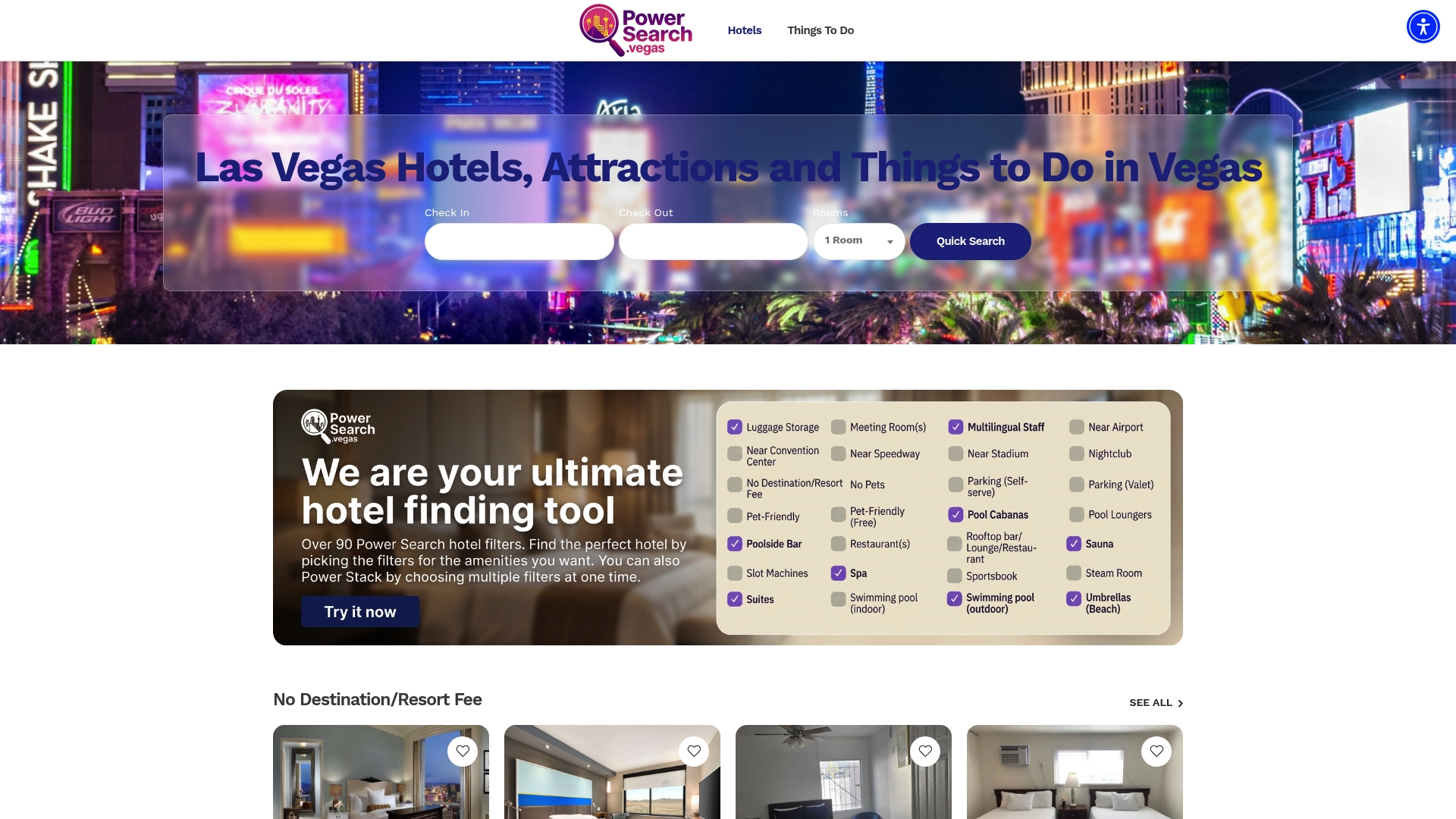
Powersearch gives corporate planners direct access to detailed hotel listings, proximity filters, and amenity comparisons across Las Vegas’s full accommodation inventory. You can search by distance to major venues, filter by group-friendly amenities, and compare pricing across luxury and mid-range properties in one place. Start your search at Powersearch.vegas and find the hotel setup that makes your next business event in Las Vegas run exactly the way you planned it.
FAQ
Why does Las Vegas attract more corporate events than other cities?
Las Vegas hosts 22,000 to 24,000 meetings annually because it combines the largest convention venue infrastructure in the U.S. with over 150,000 hotel rooms and an entertainment ecosystem that drives higher attendance than comparable destinations.
How close is Harry Reid International Airport to the Las Vegas Convention Center?
The drive from Harry Reid International Airport to the LVCC takes 10 to 15 minutes off-peak, though it can extend to 40 or more minutes during major concurrent events. Planners should build transport buffers into all VIP arrival schedules.
What is the Las Vegas Convention Center’s current capacity after renovation?
The LVCC completed a $600 million renovation ahead of 2026, expanding its capacity and modernizing its technology infrastructure to support approximately 1.2 million trade show attendees projected for the year.
How far in advance should corporate planners book hotel room blocks in Las Vegas?
Group sales data shows that 480,000 hotel room nights are already booked for just two months in early 2026, meaning planners should secure room blocks at least 12 to 18 months out for peak convention periods.
Do Las Vegas corporate events see better attendance than events in other cities?
Yes. Las Vegas events consistently achieve 10 to 15 percent higher attendance than comparable events in other cities, driven by the destination’s entertainment appeal, accessibility, and the perception that attending a Vegas conference is worth the trip on its own merits.
No Comments