

Why Concert Venues Vary in Vegas Hotels: The Full Story
Disclosure: This post may contain affiliate links. We may earn a commission for purchases made through links in this post, at no cost to you.
You walk into one Vegas hotel and find a jaw-dropping 17,500-seat arena. You walk into the one next door and discover an intimate jazz club holding maybe 300 people. Understanding why concert venues vary in Vegas hotels is one of those traveler questions that seems simple but actually unlocks everything about how Vegas entertainment works. The answer touches on hotel economics, technology ambitions, real estate constraints, and the kind of artist deals that only happen in one city on earth. Once you get it, you will book smarter, spend better, and have a genuinely better time.
Table of Contents
- Key Takeaways
- Why concert venues vary in Vegas hotels
- How hotel location shapes your concert experience
- Technology and design differences between Vegas venues
- The economics behind Vegas venue variety
- How to choose the right Vegas concert venue for your trip
- My take on why venue variety makes Vegas special
- Find your perfect Vegas hotel and concert venue with Powersearch
- FAQ
Key Takeaways
| Point | Details |
|---|---|
| Venue types span extremes | Vegas hotels host everything from 300-seat clubs to 20,000-seat arenas, each built for a different entertainment goal. |
| Location integration matters | Venues physically connected to hotels save travelers 15 to 20 minutes per visit and dramatically improve convenience. |
| Technology drives price differences | Spaces like Dolby Live with 402-speaker spatial audio justify higher ticket costs through production quality. |
| Economics shape venue variety | Nevada’s live entertainment tax and premium tourist demand push Vegas concert tickets 23% higher than comparable U.S. cities. |
| Match venue to your travel style | Choosing the right venue type before you book a hotel transforms a good trip into a great one. |
Why concert venues vary in Vegas hotels
Vegas hotel concert venues do not exist on a single spectrum. They exist in completely separate categories, each designed with a specific audience, artist type, and revenue model in mind. The sheer variety is not accidental. It is the product of decades of competition among properties that each needed to offer something the hotel down the street could not.
At the largest scale, you have stadium-level venues like Allegiant Stadium and the T-Mobile Arena, which sit adjacent to major hotel corridors and host touring megastars. These spaces seat 17,000 to 65,000 people and are built for spectacle at scale. The production complexity is staggering. Large-venue concert lighting requires coordinated multi-zone fixture groups, DMX control systems, and structural rigging planning that a small hotel club simply does not need.
Then there is the mid-size theater category. Dolby Live at Park MGM holds around 5,000 guests and represents the sweet spot many travelers love: big enough for production value, small enough that you still feel close to the artist. The Venetian Theatre and Bakkt Theater at Planet Hollywood operate in similar territory.
At the intimate end, you have venues inside hotels that hold a few hundred people. These spaces lean into the idea that smaller theaters are designed for intimacy, with spatial audio setups and sightlines where every seat feels like a good seat. Then there is the Sphere, a category entirely its own. With its 160,000-square-foot interior LED screen and spatial audio engineering, it is less a concert venue and more an experience machine.
| Venue Type | Capacity Range | Best For |
|---|---|---|
| Stadium/Arena | 17,000 to 65,000 | Touring superstars, major sporting events |
| Mid-size theater | 4,000 to 7,000 | Residency artists, strong production value |
| Boutique/club | 200 to 1,500 | Intimate performances, emerging acts |
| Immersive experience | 1,000 to 20,000 | Tech-forward shows, multimedia events |
How hotel location shapes your concert experience
Where a venue sits relative to your hotel matters more than most travelers realize before they arrive. Vegas looks compact on a map and absolutely is not on foot. The difference between a venue that is physically inside your hotel and one that requires a 20-minute rideshare is the difference between a breezy evening and a logistical headache.

The Venetian is one of the clearest examples. Guests staying there can walk directly from their room to the Venetian Theatre without ever touching the outside air. That frictionless access changes how you plan your night. You can grab dinner, catch a show, and be back at your room bar in under an hour if you want. Contrast that with the Sphere, which is technically close to The Venetian but still requires crossing through foot-traffic zones. The direct hotel-to-venue connection saves travelers 15 to 20 minutes compared to sidewalk or rideshare navigation, and on a warm Vegas night after a long show, that is not a small thing.
Physically integrated venues also support multi-event evenings more naturally. When your hotel has a show inside it, you are more likely to walk over on a whim, catch part of a set, and wander back. When you have to plan a full transit to reach a venue, the bar for going rises considerably. Vegas hotels with strong on-site entertainment actually benefit from higher in-hotel spending because guests stay in the ecosystem longer.
Pro Tip: When booking a hotel specifically for a concert, filter by venue proximity first, then amenities. Being a 2-minute walk from the show beats having a bigger pool every time.
Technology and design differences between Vegas venues
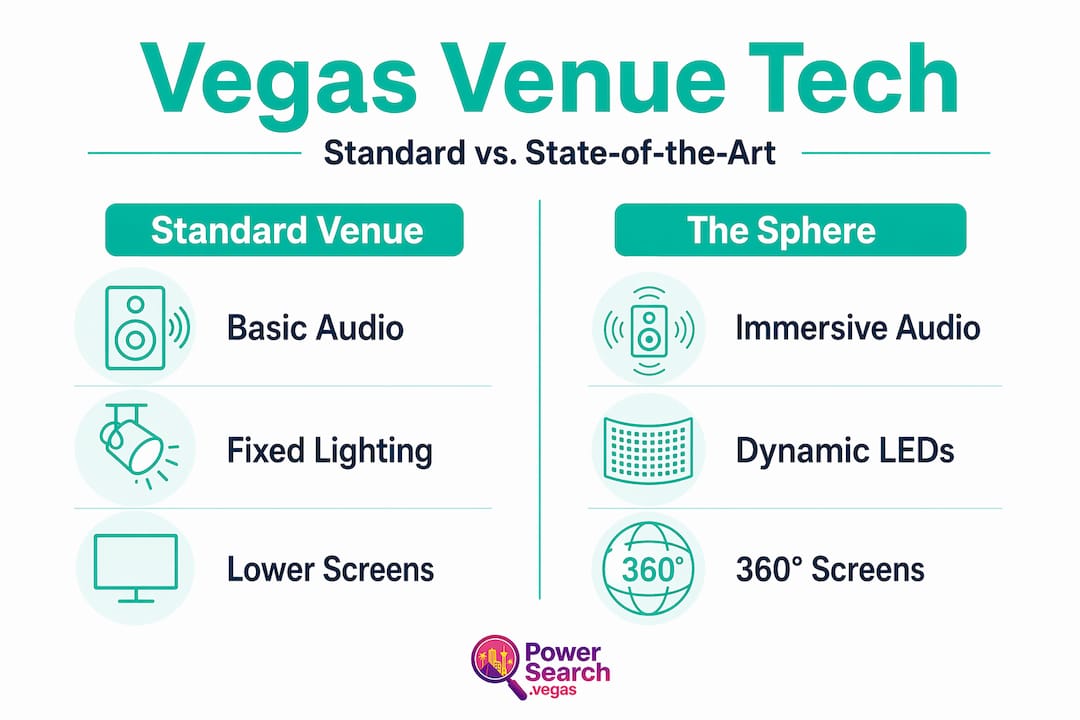
This is where concert venue differences in Vegas get genuinely fascinating. The technology gap between a standard hotel lounge performance and a show at the Sphere is not incremental. It is generational.
Stage design and venue size dictate production complexity including lighting zones, rigging height, and audience sightlines, all of which directly impact what kind of show is even possible. A 300-seat club can get away with a modest PA system, some intelligent lighting rigs, and a skilled sound engineer. A 17,000-seat arena needs massive LED walls, layered rigging systems, and a production team that can fill dead space at the back of the room with sound and light that still feels intentional.
Dolby Live at Park MGM represents a middle path that has become enormously influential in how Vegas thinks about venue design. Its 402-speaker spatial audio system requires artists to create specialized production mixes, meaning you genuinely hear a different show there than you would in a generic arena. The sound wraps around you rather than washing over you from the front.
The Sphere takes this philosophy to an extreme that would have seemed like science fiction 10 years ago. Permanent high-tech installations allow artists to deliver production quality that traditional touring setups cannot achieve. The venue itself becomes the instrument. When you look at why Vegas hotel concert spaces hit so differently compared to what you find in other cities, technology investment is a massive part of the answer.
Pro Tip: If you care about audio quality above all else, prioritize Dolby Live for its spatial sound engineering. If you want a visual experience that redefines what live entertainment means, the Sphere is in a class by itself.
| Feature | Standard Hotel Venue | Dolby Live | The Sphere |
|---|---|---|---|
| Audio system | Standard PA | 402-speaker spatial | Fully immersive spatial |
| Visual tech | Basic LED/lighting | Strong LED production | 160,000 sq. ft. LED screen |
| Show customization | Low to moderate | High | Extreme |
| Ticket price range | $30 to $150 | $100 to $350 | $200 to $500+ |
The economics behind Vegas venue variety
Understanding why Vegas hotel entertainment options cost what they cost requires a quick look at how the numbers actually work. This is not just supply and demand. There are structural forces that make Vegas concert pricing behave differently than anywhere else in the country.
Nevada’s live entertainment tax is the starting point. Tickets for major events in Vegas run approximately 23% higher than comparable shows in other U.S. cities, driven by that tax, service fees, and the reality that tourist demand rarely softens. When 40 million people visit a city annually, venues do not need to discount.
The residency model changes the economics even further. When an artist commits to a long-term residency at a Vegas hotel venue rather than touring, the hotel can invest in permanent production infrastructure that would be impossible to move from city to city. The Sphere’s $2.3 billion construction cost only makes sense because the venue operates year-round with high-ticket shows that amortize the investment over time. Premium tickets running $200 to $400 per seat are not just profit grabs. They are the financial reality of running a technology-forward venue at scale.
“Las Vegas uniquely supports premium pricing and residency models due to the scale of visitor demand and entertainment infrastructure that no other city can match.”
Smaller hotel venues operate under completely different economics. A 400-seat club inside a hotel does not need to recoup a billion-dollar build cost. It needs to keep the hotel’s entertainment calendar full, drive bar revenue, and give guests a reason to stay on property rather than walking to a competitor. That is why intimate venues can afford to take chances on emerging artists or niche genres that a massive arena would never book.
How to choose the right Vegas concert venue for your trip
Now that you understand the forces shaping Vegas concert venue types, here is how to actually apply that knowledge before you book anything.
First, decide what kind of experience you are after. Are you chasing the jaw-dropping spectacle that comes from a massive show with production values that defy explanation? Or do you want to be 30 feet from an artist you love in a room that feels personal? These are genuinely different things, and Vegas offers both at a level no other city comes close to matching.
Second, match your hotel choice to your venue priority. If you are going specifically to see a show at the Sphere, staying at The Venetian puts you in a much better position than choosing a hotel at the far end of the Strip. Check out hotel proximity considerations before you commit to a room, because the venue and the hotel really do function as a package in Vegas.
Third, factor in ticket pricing realistically. A Sphere show will run you significantly more than a mid-size theater show, but the production experience is so different that the comparison is almost meaningless. Think of them as separate entertainment categories with separate budgets rather than interchangeable options at different price points.
Finally, book early and watch for residency announcements. Las Vegas residencies often announce dates months in advance, and early buyers get both better prices and better seats. Understanding the economics of Cirque du Soleil in Vegas gives you a useful window into how residency booking and venue selection work hand in hand.
Pro Tip: Check the specific venue capacity before buying tickets. A “sold out” show at a 300-seat club feels completely different from a sold-out night at a 5,000-seat theater, even if the ticket price is similar.
My take on why venue variety makes Vegas special
I’ve spent a lot of time watching how travelers interact with Vegas entertainment, and the thing that strikes me most is how often people arrive with a single mental model of what a “Vegas show” is. They expect either a glitzy residency at a massive venue or a cheesy lounge act. The reality is so much more interesting than either of those.
What I’ve found is that the variation in venue types is the actual magic. The fact that you can see an emerging artist in a 400-person club on Friday night and then sit inside the Sphere watching something that feels like it was designed in a future decade on Saturday is genuinely unique to this city. No other entertainment market in the world offers that range under one roof, literally.
I think travelers who take time to understand the venue before booking the ticket end up with wildly better experiences than those who treat shows as an afterthought. The immersive shows at high-tech venues hit differently when you know what the space is designed to do. And the intimate club shows offer something those big venues will never be able to replicate: the feeling that the artist is actually in the room with you, not performing at you from a distant stage. My advice is always to experience at least one of each on any multi-day Vegas trip. You will leave understanding why Vegas hotel concert spaces are unlike anything else on earth.
— Mark
Find your perfect Vegas hotel and concert venue with Powersearch
Ready to turn this knowledge into a real plan? Powersearch makes it genuinely easy to match your ideal concert venue experience to the right hotel on the Strip.
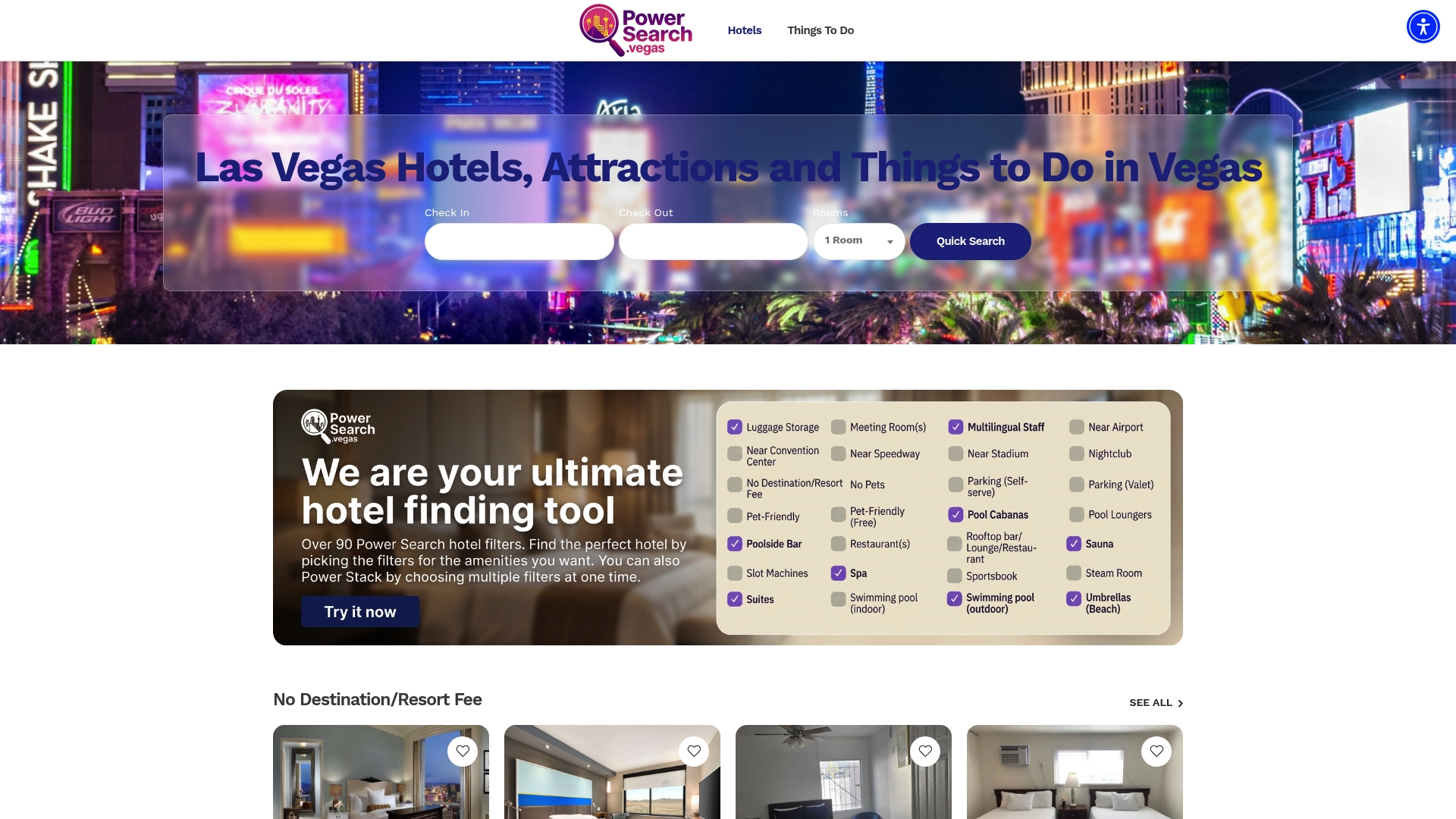
When you search and compare hotels on Powersearch, you can filter by location, amenities, and proximity to the entertainment venues that matter most to you. Whether you want to wake up steps from the Sphere, stay inside a property with its own on-site theater, or find the best value hotel near Dolby Live at Park MGM, Powersearch puts all the options in front of you without the noise. You can also browse curated guides on show schedules, venue types, and what different hotel tiers actually deliver for entertainment-focused travelers. Stop guessing and start planning with a platform built specifically for Las Vegas.
FAQ
Why do Vegas hotel concert venues vary so much in size?
Vegas hotels serve wildly different entertainment goals, from intimate residencies to touring megastar events. Venue size is dictated by the artist model, revenue expectations, and the level of production technology the hotel has invested in.
Are concerts at Vegas hotels more expensive than in other cities?
Yes. Vegas concert tickets run approximately 23% higher than comparable shows elsewhere, driven by Nevada’s live entertainment tax, service fees, and consistently high tourist demand.
What makes the Sphere different from other Vegas concert venues?
The Sphere’s permanent immersive technology including its 160,000-square-foot LED screen and spatial audio system creates production experiences that traditional touring venues cannot replicate at any price.
Does hotel location relative to the venue really matter?
Absolutely. Physical integration between hotel and venue saves travelers 15 to 20 minutes per visit and significantly improves the overall experience compared to navigating rideshare zones and foot traffic between properties.
How do I choose between an intimate club and a large arena show in Vegas?
Decide whether you want spectacle or connection. Large arenas deliver breathtaking production scale. Intimate venues deliver the feeling of proximity to the artist that no arena can match, regardless of how much production budget gets thrown at the problem.
Recommended
No Comments