
Las Vegas CES Conference Explained for Tech Pros
Disclosure: This post may contain affiliate links. We may earn a commission for purchases made through links in this post, at no cost to you.
Every January, Las Vegas transforms into the undisputed capital of global technology. The las vegas ces conference explained in simple terms is this: it is the largest and most influential tech gathering on the planet, and calling it a gadget show wildly undersells what actually happens there. CES pulls in engineers, brand executives, startup founders, advertisers, and policymakers from across the world. It sets the direction for consumer technology, shapes investment decisions, and previews the products that will define the next decade. If you want to understand where tech is headed, this is where you look first.
Table of Contents
- Key Takeaways
- What CES is and why it matters
- Key innovation themes at CES 2026
- Eureka Park and the startup engine
- CES as a media and advertising hub
- Practical tips for attending or following CES
- My honest take on what CES has become
- Plan your Las Vegas CES trip with Powersearch
- FAQ
Key Takeaways
| Point | Details |
|---|---|
| CES scale is jaw-dropping | 148,392 participants attended CES 2026, with 52% holding senior-level executive titles. |
| AI and robotics dominate | AI interest grew 22% and robotics 26% year over year, making these the two hottest categories on the show floor. |
| Startups drive real innovation | Eureka Park hosts 1,400+ emerging companies, and the sharpest future-tech signals often come from there, not the big brand booths. |
| Accessibility is now core | The debut Accessibility Stage at CES 2026 marked a shift from niche product to mainstream design standard. |
| Planning ahead is everything | Hotel rooms and meeting spaces disappear fast. Booking early and scouting off-strip workspaces is the only way to work effectively during the show. |
What CES is and why it matters
CES, short for Consumer Electronics Show, has been running since 1967. What started as a regional trade event for consumer electronics manufacturers has grown into a mind-bending global spectacle that now touches industries from automotive and healthcare to advertising and sustainability. The Consumer Technology Association (CTA) organizes it every January in Las Vegas, and the city is genuinely transformed for the duration.
The event spreads across multiple venues, with the Las Vegas Convention Center serving as the primary hub. The Venetian Expo handles the startup ecosystem through its Eureka Park pavilion, while additional spaces accommodate media summits, investor meetings, and specialized industry gatherings. You are not just visiting one building. You are navigating an entire city-within-a-city.
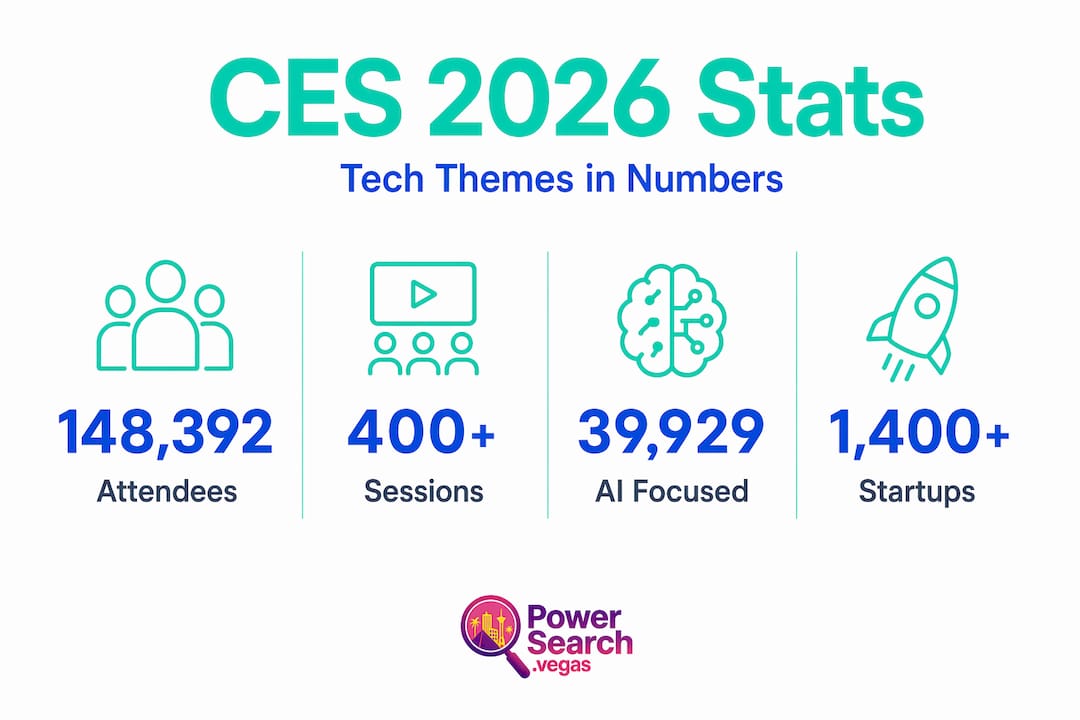
The numbers from CES 2026 give you a real sense of the scale. Over 400 conference sessions ran across the event, featuring more than 1,400 speakers. Attendance reached 148,392 participants, a 4% increase year over year. More than half of those attendees were senior executives. This is not a consumer expo where people line up to play with demo units. It is where the people who build and fund the future of technology come to talk shop.
The attendee mix is genuinely diverse in the most useful sense of the word. You get global brands like Samsung, Sony, and LG alongside tiny three-person startups. Journalists, analysts, marketers, policy advisors, and investors all share the same floor space. That collision of perspectives is part of what makes CES so electric.
Key innovation themes at CES 2026
If you could distill CES 2026 into a single word, that word would be AI. But not the chatbot version of AI that dominated headlines in 2023. The AI conversation at CES 2026 was about ambient computing: technology that senses, adapts, and acts without you needing to prompt it. AI is functioning as the central platform underneath nearly every product category, from appliances to automobiles.
AI attendance interest grew 22% year over year, drawing 39,929 attendees to AI-focused sessions and exhibits. Robotics was not far behind, with a 26% increase in attendance interest and 19,605 dedicated attendees. The convergence of AI and robotics produced some of the most talked-about moments of the show, including early consumer humanoid robots that hint at genuine lifestyle shifts coming within the next few years.
Beyond AI and robotics, several other categories made serious noise at CES 2026:
Automotive technology keeps accelerating at a pace that surprises even industry insiders. CES ranks as the nation’s second-largest auto show, with major manufacturers showcasing autonomous and driver-assist systems that are ready to hit the market, not just concept prototypes sitting under glass.
Health technology is another category that has quietly matured into one of the most substantive areas at the show. Wearables, remote diagnostics, and AI-assisted wellness tools are no longer futuristic promises. They are products with shipping dates.
Then there is accessibility, which might be the most significant shift in CES’s identity over recent years. Accessibility programming at CES 2026 included 25 sessions covering inclusive product design, workforce inclusion, and digital health. The debut of a dedicated Accessibility Stage marked a genuine philosophical shift. Accessibility is no longer a compliance checkbox. It is now viewed as a lens through which all product relevance and market reach should be measured.
Pro Tip: If you are tracking innovation for professional purposes, the Accessibility Stage and health tech exhibits are where some of the most commercially significant breakthroughs are happening. The media tends to cover the flashy robots. The real money is in the health and accessibility categories.
Eureka Park and the startup engine
Here is something that surprises most first-time CES attendees. The most forward-looking technology at the show is often not in the massive booths with the expensive lighting rigs. True vision for future tech frequently emerges from Eureka Park’s startup community despite the media attention that naturally gravitates toward established brands.
Eureka Park hosts 1,400 or more emerging companies showcasing early-stage products across AI, health tech, accessibility, and sustainability. These are teams of founders who have often bootstrapped their way to a working prototype and are using CES as their global coming-out moment. The energy in Eureka Park hits different compared to the polished corporate presentations elsewhere on the floor.
For tech professionals specifically, Eureka Park functions as an early warning system for the innovation pipeline. The startups you see pitching ideas there in January are the companies you will read acquisition announcements about 18 months later. Tracking what gets buzz at Eureka Park is genuinely one of the most efficient ways to stay ahead of industry trends.
The CES Foundry is another area worth your time. It focuses specifically on startups tackling global AI and quantum technology challenges, and it surfaces next-generation breakthroughs that do not always fit neatly into the mainstream product categories.
Pro Tip: Block out a dedicated half-day for Eureka Park. Walk every row if you can. The companies that do not have polished pitch decks are often the ones sitting on the most interesting ideas.
CES as a media and advertising hub
One of the most underappreciated dimensions of the Las Vegas CES conference explained for non-tech audiences is how deeply the advertising and media industries have embedded themselves into the event. CES is no longer just a technology show. It is a critical forum for advertising industry strategy and partnership-building at the highest level.
The C-Space pavilion is dedicated specifically to media, marketing, and advertising innovation. This is where the chief marketing officers and agency executives gather to shape media investment strategies for the year ahead. Marketing and advertising attendees grew by 10% year over year at CES 2026, reaching 13,433 dedicated attendees. That number reflects how central CES has become to the media planning calendar.
Why does this matter for tech professionals? Because the intersection of consumer technology and advertising strategy is where the commercial viability of new tech gets determined. Here is how CES functions as a strategic business accelerator:
- Brand partnerships with technology companies are often announced at CES, setting the tone for collaborative product development throughout the year.
- Media investment decisions are shaped by what categories gain traction on the show floor, directly influencing which tech sectors receive advertising budgets.
- Data-driven marketing tools and platforms showcase their latest capabilities at C-Space, giving marketers and tech developers a shared language for consumer engagement.
- Networking at CES operates at a density and seniority level that is genuinely hard to replicate at any other single event.
For advertisers, CES has become a strategic meeting point that shapes the entire year’s media and engagement playbook. If you are a tech professional who works anywhere near the marketing function of your organization, CES deserves a place on your calendar.
Practical tips for attending or following CES
Las Vegas during CES is an extraordinary experience, but it demands preparation. The city handles the load well, but the conference places enormous strain on local infrastructure, and the professionals who thrive at CES are the ones who planned ahead.
Hotel Wi-Fi throttling and crowded public spaces are real challenges that can derail your work if you are not ready for them. Here is what experienced CES attendees know that first-timers often learn the hard way:
Hotel rooms and meeting spaces book up months in advance. Check the weekly hotel rate patterns before you commit to accommodation, because rates fluctuate dramatically and booking early almost always saves you real money. For attendees flying in, airport-adjacent hotel options can offer better availability and easier logistics than Strip-adjacent properties during peak CES week.
Book off-strip coworking spaces and private meeting rooms well in advance. These become gold during CES week, and the professionals who secure quiet workspace away from the noise of the show floor are dramatically more productive than those trying to conduct business meetings in hotel lobbies.
Prioritize the CES Foundry and Accessibility Stage in your personal schedule. These two areas represent the highest signal-to-noise ratio on the floor for anyone tracking where technology is genuinely heading.
If you cannot attend in person, CES announcements are heavily covered and most keynotes stream live. Follow journalists who specialize in the specific sectors you track rather than reading general roundups. The niche coverage is where the genuinely useful insights live.
Pro Tip: Download the official CES app before you arrive and build your floor plan the night before each show day. The venues are massive, and improvising costs you hours.
My honest take on what CES has become
I have spent enough time around technology events to know when an event has genuinely evolved and when it is just scaling up the same show with a bigger budget. CES falls into the first category, and I think it is under-credited for how much it has matured.
The “gadget show” label stuck for years because it was earned. But what I have noticed over recent cycles is a shift in what generates the most serious professional attention. It is not the televisions with the jaw-dropping screen specs, though those are still there. The real intellectual energy at CES now lives in the intersections: AI meeting healthcare, accessibility design meeting mass-market consumer products, automotive technology meeting software platforms.
What strikes me most is the accessibility shift. Accessibility at CES has evolved from a niche to a lens for all product relevance, and I think that change tells you something important about the maturity of the broader tech industry. When a show this commercial makes inclusive design a headline priority, it signals market forces at work, not just good intentions.
My practical advice is this: stop treating CES as a single-event spectacle and start treating it as a barometer. The trends that get serious floor space in January tend to become the business cases that get funded by March and the product launches that get headlines by fall. Watching CES carefully, even from a distance, is one of the most efficient ways to stay genuinely ahead.
— Mark
Plan your Las Vegas CES trip with Powersearch
CES week in Las Vegas is thrilling, but the logistics can be genuinely overwhelming if you try to figure it out last minute. That is where Powersearch comes in.
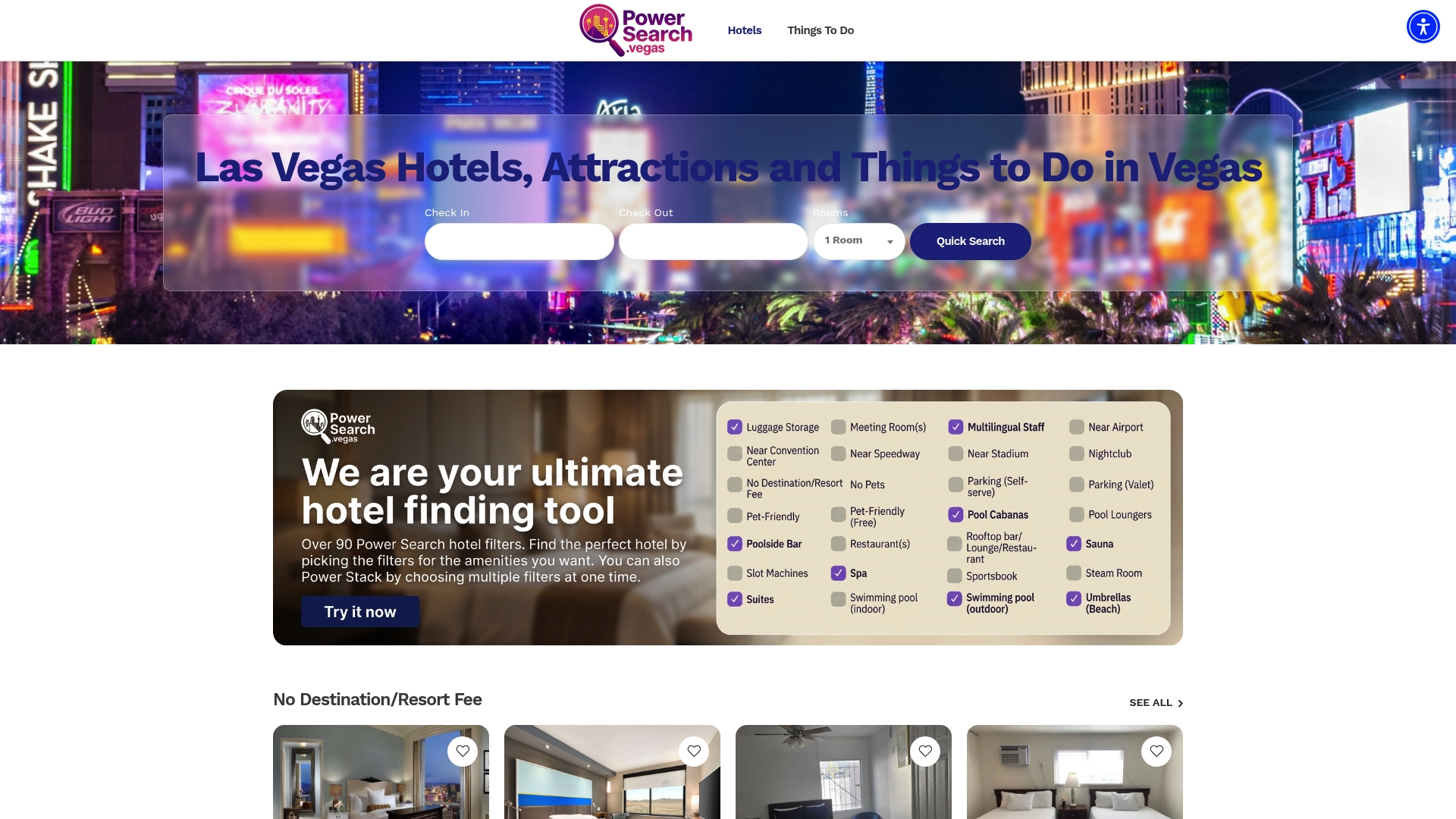
Powersearch is built specifically for travelers heading to Las Vegas, and CES attendees are exactly the kind of visitors who benefit from having a dedicated planning resource. The platform helps you compare hotels across every price point and neighborhood, so you can find accommodation that fits your budget and keeps you close to the venues that matter most to your schedule. Whether you are looking for a luxury suite on the Strip or a practical option near the convention center, Powersearch puts the options side by side so you can decide with confidence. Start planning your CES experience now at Powersearch before the best rooms disappear.
FAQ
What is CES and where is it held?
CES, the Consumer Electronics Show, is the world’s largest annual technology conference, held every January in Las Vegas, Nevada. It is organized by the Consumer Technology Association and spans multiple venues including the Las Vegas Convention Center.
How many people attend CES each year?
CES 2026 attracted 148,392 attendees, a 4% increase from the prior year, with more than half of participants holding senior executive roles.
What were the biggest technology themes at CES 2026?
AI and robotics dominated CES 2026, with AI attendance interest up 22% and robotics up 26%. Accessibility, automotive technology, and health tech were also major focus areas throughout the event.
What is Eureka Park at CES?
Eureka Park is a dedicated pavilion within CES that hosts over 1,400 startups and early-stage companies. It is widely regarded as the best place at CES to spot emerging technology trends before they reach mainstream markets.
Do you need to attend CES in person to get value from it?
No. Most CES keynotes stream live and the conference generates extensive press coverage. Following specialist journalists in your sector and tracking official CES announcements gives you substantial insight even if you are not physically in Las Vegas.
No Comments