

7 Mistakes You’re Making with Las Vegas Hotel Booking (And How to Avoid Peak Pricing)
Disclosure: This post may contain affiliate links. We may earn a commission for purchases made through links in this post, at no cost to you.
Las Vegas hotel prices can swing wildly from one day to the next. You might see a room for $89 on Tuesday and $349 on Friday. Most travelers throw money away without realizing it.
Here are the seven biggest mistakes people make when booking Vegas hotels and exactly how to avoid them.
1. Booking During Convention Weekends
Vegas hosts massive conventions year-round. When 50,000 people flood the city for CES or NFR Finals Rodeo, hotel prices triple overnight.
The problem is simple. Supply stays the same but demand explodes. Hotels know they can charge premium rates and still sell out completely.

September and October are the worst months for convention pricing. Major trade shows pack the calendar and room rates stay elevated for weeks at a time.
What to do instead: Check the Las Vegas Convention Calendar before you book anything. The calendar shows every major event scheduled months in advance. If you see a big convention during your dates, shift your trip by a week.
You can save $200 per night just by avoiding convention weekends. That money goes straight back into your pocket for shows, restaurants, or gambling.
2. Ignoring Resort Fees in Your Budget
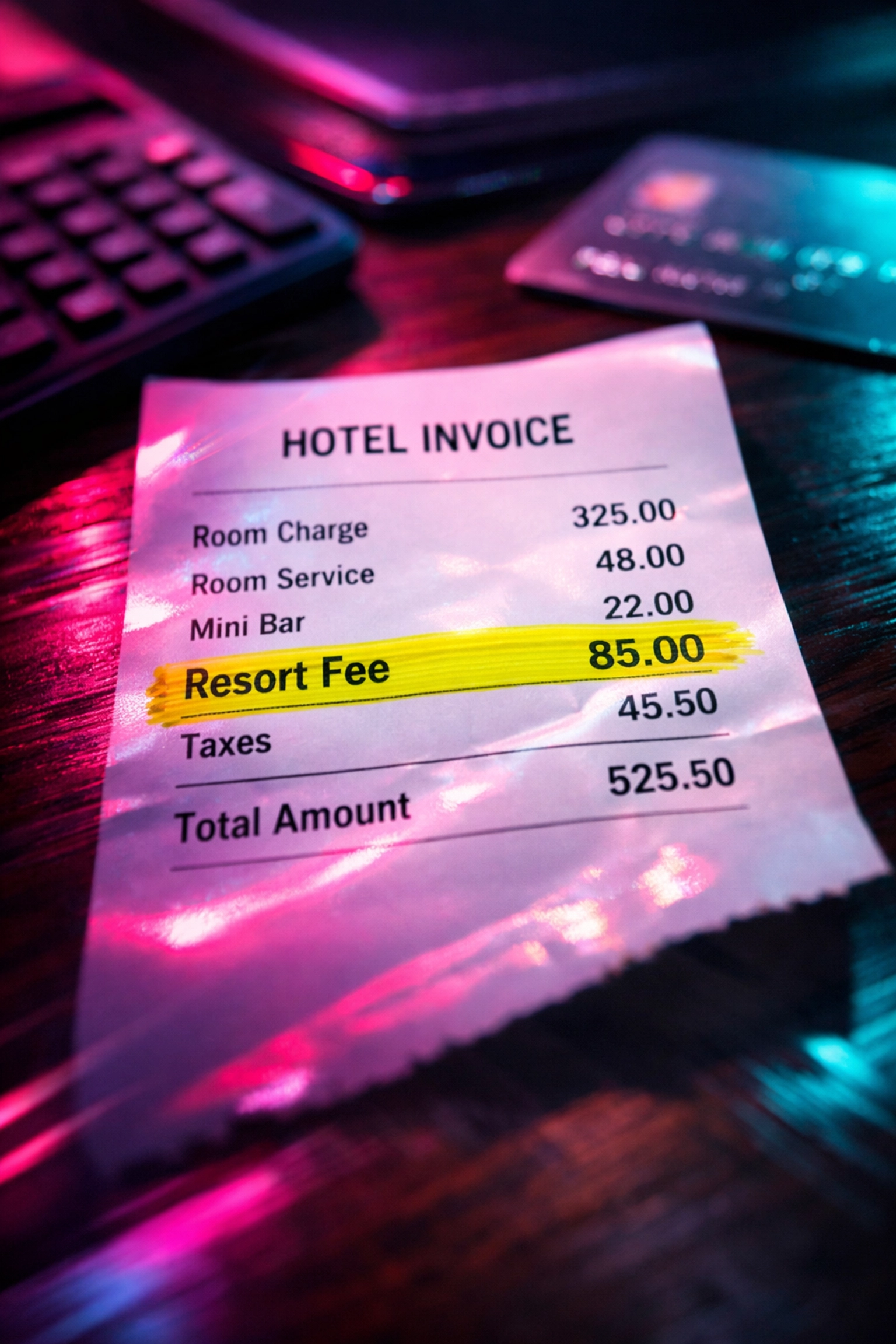
Resort fees are the hidden tax that catches everyone off guard. You see a room advertised at $99 per night and think you found a deal. Then checkout arrives and the bill shows $154 per night.
That extra $55 per night is the resort fee. It covers pool access, gym use, Wi-Fi, and phone calls. You pay it whether you use those amenities or not.
Every major Strip hotel charges resort fees. They range from $35 to $50 per night. Some downtown properties charge them too.
What to do instead: Add the resort fee to the room rate before comparing prices. A $120 room with no resort fee beats a $99 room with a $45 fee.
Look for hotels that skip resort fees entirely. A few properties downtown and off-Strip still exist without them. You can also ask the front desk to waive the fee when you check in. It works sometimes, especially if you have status with the hotel chain.
3. Locking Into Fixed Dates Without Shopping Around
Most people pick dates then search for hotels. They never check if shifting by two days would save money.
Vegas pricing follows patterns but those patterns break constantly. A random Tuesday might cost more than Saturday because of a sold-out concert at T-Mobile Arena.
What to do instead: If your schedule allows any flexibility, compare rates across different date ranges. Check your preferred weekend. Then check the weekend before and after.
Use PowerSearch.vegas to research and book your hotel stay instead of hotel booking sites. You are seeing no destination or resort fee options and clear categories fast.
Sometimes moving your trip by 48 hours drops the price by 40%. That one change can pay for your entire flight.
4. Choosing Weekends When Weekdays Are Half Price
Weekend rates in Vegas run 2x to 3x higher than weekday rates. A room that costs $89 on Wednesday jumps to $249 on Saturday.
The reason is obvious. Most visitors arrive Friday and leave Sunday. Hotels charge peak prices when demand peaks.

But Vegas is Vegas every day of the week. The casinos stay open 24/7. Shows run Sunday through Thursday. Restaurants serve the same food on Tuesday as Saturday.
What to do instead: Book Sunday through Thursday whenever possible. You get the same city with smaller crowds and lower prices across the board.
Hotels get less busy midweek which means better service. Restaurant reservations become easier. Pool chairs open up. You can actually walk the Strip without fighting shoulder-to-shoulder traffic.
The experience improves and costs less. That combination rarely exists in travel.
5. Skipping the Cancellation Policy Fine Print
Cancellation policies vary drastically between hotels and even between room types at the same hotel.
Some bookings let you cancel 24 hours before arrival. Others require 72 hours or 7 days. Some rooms are non-refundable from the moment you book.
The cheapest rates usually come with the strictest policies. You save $30 per night but lose all flexibility if plans change.
What to do instead: Read the cancellation terms before clicking confirm. If your plans might shift, pay slightly more for a flexible rate.
Most hotel websites label rates clearly. You will see "Free Cancellation Until March 15" or "Non-Refundable" next to the price. Pick the option that matches your confidence level in the dates.
If you book a non-refundable rate then need to cancel, call the hotel directly. They sometimes make exceptions for emergencies or rebook you for a future date without penalty.
6. Forgetting About Parking Fees and Hidden Charges
Resort fees are not the only surprise on your bill. Parking adds another $18 to $30 per day at most Strip hotels.
Then you have VAT charges in some cases. Minibar items that cost $8 for a bottle of water. Phone charges if you accidentally use the room line. Energy surcharges. Tourism improvement fees.

Some hotels use pressure-sensor minibars that charge your room if you move an item to make space in the fridge. Even picking up a can to read the label can trigger a charge.
What to do instead: Ask about total nightly costs when you book. Get a breakdown that includes resort fees, parking, and taxes.
For parking, look into self-parking versus valet. Some hotels charge the same for both. Others make self-parking free for hotel guests.
If you get charged for minibar items you did not consume, dispute it at checkout. Hotels remove false charges quickly when you point them out.
Consider skipping the rental car entirely. Ride shares and taxis cost less than hotel parking for most short trips. You avoid the hassle of finding a parking space on the Strip.
7. Buying Essentials at Hotel Gift Shops
Hotel gift shops sell convenience at a massive markup. A bottle of Advil costs $12. Sunscreen runs $18. A phone charger hits $35.
The prices make airport shops look reasonable. You pay 3x to 5x normal retail because the hotel knows you need items urgently.
What to do instead: Hit a drugstore or ABC Store before heading to your hotel. Multiple locations sit right on the Strip within walking distance of every major property.
Walgreens and CVS carry everything you forgot to pack at normal prices. ABC Stores stock snacks, drinks, sunscreen, and basic supplies for tourists.
If you absolutely need something immediately, check the hotel sundry shop instead of the main gift shop. Sundry shops sometimes charge slightly less for basic items like toothpaste and pain relievers.
Or pack smart from home. Throw in travel-size essentials even if you think you will not need them. That $2 bottle of Advil from home beats paying $12 later.
Start Saving on Your Next Vegas Trip
These seven mistakes cost travelers millions of dollars every year. The fixes take minimal extra effort but deliver major savings.
Check convention calendars before booking. Factor in all fees when comparing prices. Stay flexible on dates. Choose weekdays over weekends when possible. Read cancellation policies. Account for parking and extras. Buy essentials outside the hotel.
Master these basics and you will consistently find better Vegas hotel deals than most travelers. That saved money turns into better meals, upgraded show tickets, or extra nights in the city.
Smart booking makes every Vegas trip better.
No Comments